
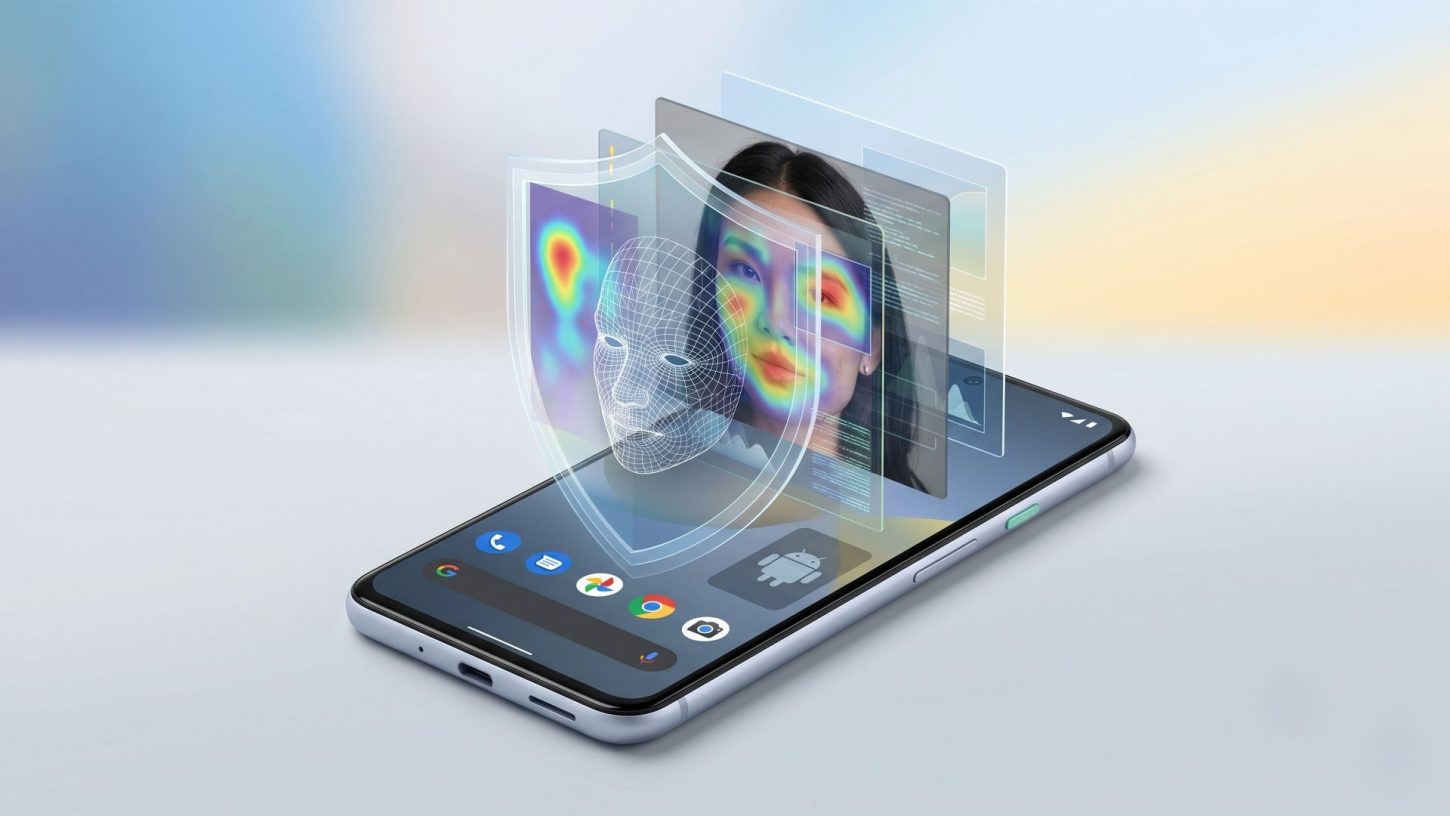
Imagine your phone rings. The caller ID displays a familiar name: “Mom.” You answer, and the voice on the other end sounds exactly like her, the same cadence, the same warmth, the same pitch. But the person speaking isn’t your mother. It’s an offshore scammer using cheap, easily accessible generative AI to clone her voice, fabricating an emergency to trick you into transferring funds immediately.
As bad actors weaponize artificial intelligence to orchestrate hyper-realistic impersonation scams, traditional defenses like basic caller ID have become dangerously obsolete. Recognizing this shifting battlefield, Google has deployed an industry-first defense mechanism: Fake Call Detection.
Integrated directly into the Android ecosystem, this security breakthrough leverages cryptographic principles and real-time network validation to strip AI deepfakers of their most dangerous weapon: the element of surprise.
The Anatomy of the Threat: The $3 Billion Fraud Crisis
Social engineering and impersonation scams are scaling at an alarming rate. According to data from the Federal Trade Commission (FTC), impersonation fraud losses topped $2.95 billion recently and continue to climb globally.
Historically, scammers relied on basic “number spoofing”, routing internet-based voice calls through software to manipulate the caller ID and make it look like a trusted local number or a recognized contact. However, the integration of real-time AI voice cloning has turned these annoyances into devastating financial threats. By feeding just a few seconds of a person’s voice (often scraped from social media video clips) into an AI model, bad actors can mimic family members, corporate executives, or authority figures with terrifying accuracy.
How It Works: The Cryptographic “Digital Handshake”
For tech-forward platforms like Blockrora, the beauty of Google’s new system lies in its architecture. Instead of relying purely on post-facto voice analysis or subjective detection, Google has introduced a proactive verification protocol built on the concepts of zero-trust and device-to-device cryptographic validation.
Google describes the mechanism as a “digital handshake” operating behind the scenes:
- The Initial Call: When a contact calls your phone, and both devices are utilizing the Phone by Google ecosystem, the caller’s device automatically and silently transmits a real-time cryptographic confirmation signal.
- The Verification Layer: This handshake is routed securely via end-to-end encrypted Rich Communication Services (RCS) technology.
- The Disconnect Check: If a scammer is spoofing the number, that critical initial confirmation signal will be entirely missing. The recipient’s Android device instantly flags this anomaly.
- The Real-Time Ping: Upon noticing the missing signal, your phone pings the contact’s actual physical device over the network to double-check. If the real device responds with a silent, automated message indicating, “I am not currently placing a call,” the system intercepts the deception.
- The Warning: An explicit alert immediately populates your screen, warning you that the incoming call is an unverified spoof and advising you to hang up right away.
Detects Missing Cryptographic Signal
Mom’s Actual Physical Phone
“I am not making a call right now”
Uncompromising Privacy: Security Without Surveillance
In the blockchain and broader Web3 sectors, user privacy and data sovereignty are paramount. Whenever tech giants introduce features that analyze communications, a natural red flag is raised: Is my data being harvested?
Google has anticipated this concern by anchoring Fake Call Detection entirely within a privacy-first framework. Because the architecture relies on network-level device validation rather than recording or actively listening to call content, user privacy remains uncompromised.
The underlying cryptographic handshake occurs purely ephemerally. The system doesn’t log conversation transcripts, analyze biometric voice data during this specific handshake process, or send private metadata back to centralized Google servers. It is a binary validation of device state, proving mathematically and logistically whether the device is actually initiating a call.
Rollout and Ecosystem Requirements
Google is rolling out Fake Call Detection globally, raising the security baseline across the entire mobile landscape. The rollout schedule and technical requirements include:
- OS Compatibility: Available on devices running Android 12 and above.
- Phased Deployment: The feature launches this month, debuting first on Google Pixel hardware before expanding across the broader Android ecosystem.
- Software Dependencies: To activate the protection, both the caller and the recipient must have Phone by Google, Contacts, and Google Messages installed, with RCS capabilities actively enabled.
While Phone by Google is already the default dialer for the vast majority of Android devices, users on custom manufacturer skins can download the official app directly from the Play Store to immediately opt into this defense layer.
The New Standard of Mobile Security
The deployment of Fake Call Detection marks a vital paradigm shift in mobile security. For years, users have been forced to play defense, relying on skepticism, intuition, and retroactive caution to avoid being scammed.
By utilizing end-to-end encrypted communication networks to cross-examine a caller’s physical device in real time, Google is shifting the burden of verification away from vulnerable humans and onto unyielding cryptographic protocols. In an era where human senses can easily be fooled by generative AI, math, and decentralized network validation remain our most reliable shields.