


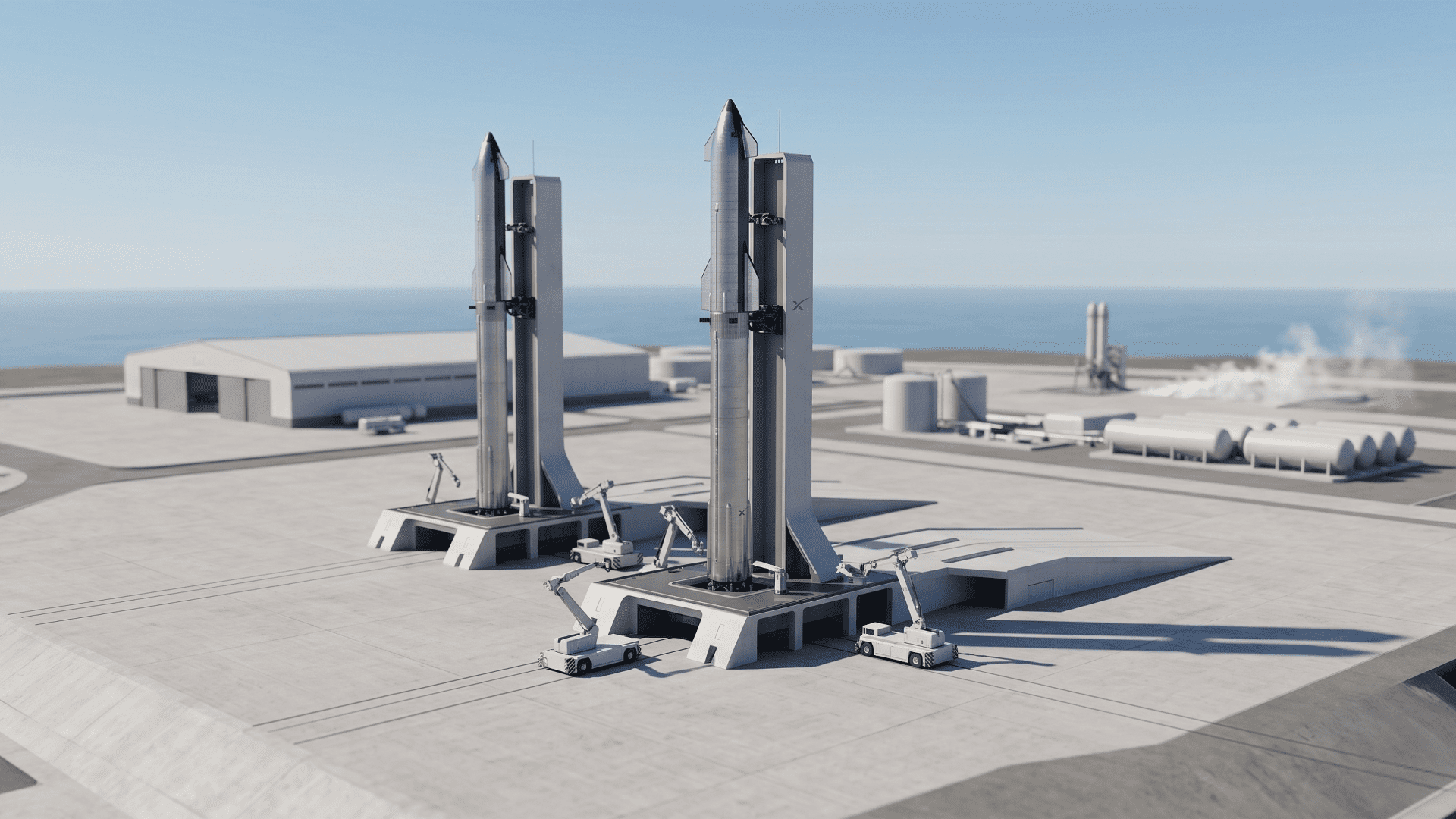
SpaceX is no longer just aiming to lead the space race; it is actively engineering a private monopoly over low-Earth orbit (LEO). Following the public release of its highly anticipated Nasdaq and Nasdaq Texas listing prospectus (under the ticker “SPCX”), the scale of Elon Musk’s extraterrestrial ambitions has been laid bare.
The most jaw-dropping revelation? Within the next five years, SpaceX plans to ramp up operations to a staggering 10,000 rocket launches per year.
To put that into perspective, SpaceX completed 170 launches in 2025. Scaling to 10,000 means executing one rocket launch every 53 minutes, 24/7. Here is an inside look at how SpaceX plans to achieve an hourly launch cadence, what it means for the tech landscape, and the serious consequences of a radically crowded sky.
From Rocket Manufacturer to Space-Based AI Powerhouse
For years, SpaceX was viewed primarily as a transportation company for satellites and astronauts. The S-1 filing firmly rewrites that narrative. Following its blockbuster merger with Musk’s AI startup, xAI, SpaceX is re-emerging as a $1.75 trillion AI infrastructure play.
According to the prospectus, the staggering launch cadence is required to deploy a massive cosmic architecture:
- Massive Satellite Deployment: Musk aims to launch 10,000 Starlink communications satellites annually to bolster its global broadband and mobile network. As of March 2026, the network already commands 9,600 active satellites.
- Extraterrestrial Data Centers: The ultimate crown jewel of the filing is a proposed constellation of up to one million spacecraft designed to harness solar power to run space-based AI data centers.
By bypassing land-use constraints and tapping into uninterrupted solar energy, SpaceX is chasing an untapped, eye-watering $28.5-trillion orbital economy. But pushing thousands of rockets through the atmosphere to achieve this comes with unprecedented physical and environmental risks.
The Consequences: The Dark Side of an Hourly Launch Cadence
While the engineering feat of an hourly launch is a marvel, the immediate and long-term implications for our planet and orbital infrastructure are causing severe concern among scientists, regulators, and competitors.
1. The High-Stakes “Orbital Traffic Jam”
Space is big, but low-Earth orbit is a finite resource. SpaceX already commands roughly two-thirds of all operational satellites of any kind, and three out of every four active, maneuverable satellites in LEO are Starlinks.
Adding tens of thousands of new objects annually creates a logistical nightmare. The S-1 prospectus revealed that in 2025, Starlink satellites had to execute more than 1,000 automated collision-avoidance maneuvers per day. If the orbital population scales by a factor of ten or one hundred, the statistical likelihood of collisions skyrockets. A single collision could trigger the Kessler Syndrome, a catastrophic chain reaction of cascading space debris that could render LEO entirely unusable for generations.
2. Atmospheric Pollution and Ozone Depletion
Rockets are essentially giant chemical factories puncturing the atmosphere. Burning thousands of tons of propellant every 53 minutes releases massive amounts of black carbon (soot), alumina particles, and nitrogen oxides directly into the stratosphere and mesosphere.
Unlike terrestrial pollution, which rain washes out of the lower atmosphere, orbital emissions linger in the upper atmosphere for years. Scientists warn that a 10,000-launch annual cadence could deplete the protective ozone layer and introduce a “geoengineering” effect, trapping heat and altering global climate patterns in ways we don’t yet fully comprehend.
3. Re-entry Pollution: “Metal Rain”
Satellites in LEO have relatively short lifespans (typically 5 to 7 years) before they de-orbit and burn up in the Earth’s atmosphere. Decommissioning thousands of satellites a year means vaporizing tons of aluminum, titanium, and exotic materials daily in the upper atmosphere.
Atmospheric scientists are highly concerned about the long-term chemical alterations of the upper atmosphere from this constant “metal rain,” which could create artificial reflective clouds or interact dangerously with the magnetic field.
4. The Erasure of the Night Sky
For astronomers and stargazers, a sky populated by hundreds of thousands of highly reflective satellites is an existential threat to science. Ground-based telescopes are already battling light pollution from Starlink “trains.” An hourly launch frequency could make it virtually impossible to view deep-space phenomena without digital corruption, effectively blinding humanity to incoming asteroids or cosmic discoveries.
A Bold but Chaotic Future
SpaceX’s S-1 filing proves that the next frontier of tech infrastructure isn’t under our feet; it’s over our heads. The concept of decentralized, orbital AI data centers powered by the sun sounds like science fiction come to life.
However, humanity is on the verge of turning low-Earth orbit into a hyper-congested toll road controlled almost exclusively by a single private corporation. As SpaceX sprints toward its June IPO, the global tech community must weigh the benefits of instant orbital AI against the heavy environmental and physical costs of a rocket piercing our atmosphere every 53 minutes.