
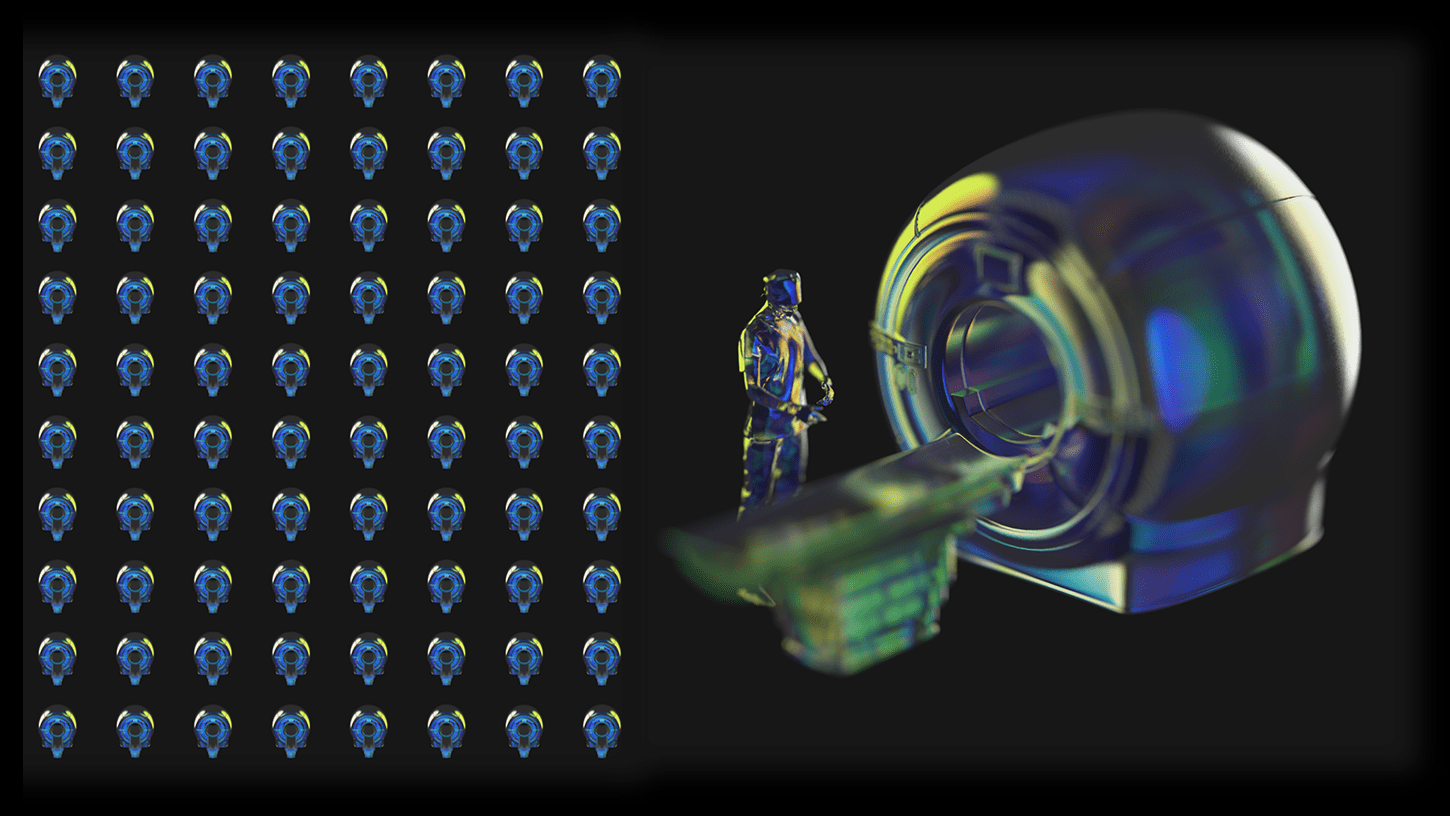
In the field of medical imaging, Magnetic Resonance Imaging (MRI) has long been regarded as the gold standard for non-invasive diagnosis. But despite its clinical power, MRI remains largely inaccessible to the majority of the global population. The cost, infrastructure demands, and complexity of existing systems make scaling nearly impossible.
Enter Chipiron, a Paris-based medtech startup with a bold vision: to scale MRI accessibility by 100-fold using ultra-low field technology and AI-driven innovation. Their mission is as ambitious as it is necessary, leveraging disruptive hardware and software to make early diagnosis and image-guided therapies available worldwide.
The Problem with Traditional MRI
Current MRI systems are incredibly resource-intensive. They require:
- Shielded rooms to block external interference.
- Complex cooling systems.
- Trained technicians for operation.
- Multi-million-dollar investments in infrastructure.
This has left billions of people underserved, particularly in emerging markets where MRI access is either limited or non-existent. Chipiron argues that the status quo simply cannot scale to meet global healthcare needs.
A Light, Scalable, AI-Powered MRI
Chipiron is rewriting the rules of MRI design. Their ultra-low field (<10 mT) machine is:
- Portable and one-person movable – no cranes or complex installations.
- Plug-and-play – runs off a standard wall outlet.
- Operator-friendly – designed for non-technician use.
- Affordable – slashing the cost barrier to entry.
At its core, this is the world’s first lightweight, open full-body MRI system that removes many of the logistical and financial bottlenecks of traditional machines.
The Technology Stack
Chipiron’s innovation lies in an advanced integration of quantum detection, AI, and novel cooling systems:
- Quantum SQUID Detection System – Their patented low-Tc SQUID volume gradiometer is the first of its kind, capable of acquiring MRI signals in an open environment. It improves the Signal-to-Noise Ratio (SNR) by up to 10x over prior low-field attempts.
- AI-Powered Noise Cancellation – Using both linear and non-linear noise suppression techniques, Chipiron enhances weaker ultra-low field signals to ensure high-quality imaging.
- Ultra-Light Cooling System – An MRI-compatible SQUID cryostat maintains detector temperatures at 4K, enabling efficient signal capture without massive infrastructure.
- AI Reconstruction Algorithms – Combining ultra-low field EPI, partial Fourier, and Gaussian undersampling, Chipiron reduces repetition times, accelerating clinically relevant imaging.
Together, these breakthroughs make low-field MRI not only viable but scalable.
Funding and Recognition
Chipiron’s bold vision has caught the attention of global investors and innovation platforms:
- $17M Series A Round (April 2025).
- €2.5M grant + €15M equity via the EIC Accelerator (July 2024).
- €3.6M non-dilutive investment from France 2030 (July 2024).
- Winner of Innovation of the Year at VivaTech 2025, beating 600 startups.
- Named Medtech of the Year by France Biotech (2024).
- Founders recognized as Innovators of the Year by Le Point magazine.
This momentum gives the startup both the capital and credibility to pursue aggressive R&D and international expansion.
Roadmap to Commercialization
Chipiron isn’t just experimenting—they’re moving fast:
- June 2026 – Completion of Phase 2 R&D with clinical-grade imaging.
- November 2026 – US expansion with a Boston office and FDA pre-submission phase.
- September 2027 – Formal FDA submission.
- March 2028 – Target for FDA 510(k) clearance.
If successful, this timeline positions Chipiron as one of the fastest-moving disruptors in the global medtech space.
Why It Matters
The implications of a 100x scalable MRI solution are immense:
- Early diagnosis in underserved regions – Detecting cancer, cardiovascular, and neurological diseases before they become fatal.
- Non-invasive, image-guided therapies – Expanding treatment options without costly infrastructure.
- Decentralized healthcare delivery – Enabling hospitals, clinics, and even mobile units to offer MRI scans.
For billions of people, this could mark the first time advanced imaging technology is within reach.
Final Thoughts
Chipiron represents the future of medical imaging: affordable, portable, and AI-powered. While still investigational and awaiting regulatory approval, the company’s rapid progress suggests a turning point for global healthcare accessibility.
If their ambitious roadmap holds true, by 2028, scalable MRI could move from a radical idea to a clinical reality, reshaping not just hospitals, but entire healthcare systems.