
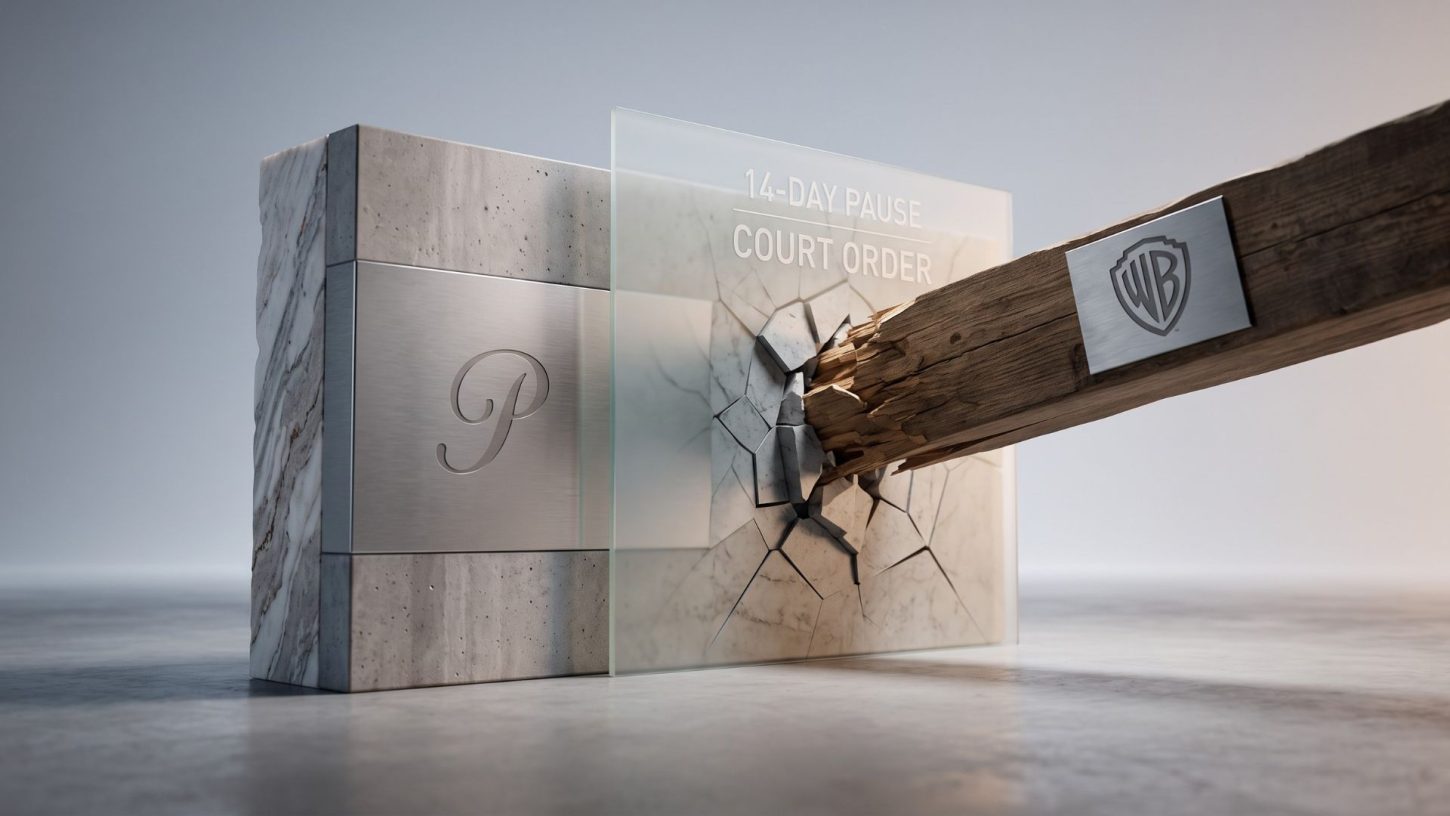
Paramount’s massive plan to buy Warner Bros. Discovery just ran into its biggest obstacle yet. On Monday, a federal judge ordered a temporary halt to the $110 billion merger, giving a group of states more time to make their case that the deal should never happen at all.
U.S. District Judge Araceli Martínez-Olguín, based in Oakland, California, granted a 14-day restraining order that stops Paramount from closing the acquisition. The pause could stretch to 28 days if needed.
The order came after 12 states, led by California Attorney General Rob Bonta, sued last week to block the deal. Their argument: combining Paramount and Warner Bros. Discovery would merge two of the top three cable programmers and two of the top five film distributors, giving one company too much control over movies, TV, and streaming.
A hearing on whether to extend the block further is set for August 3.
Why It Matters
This deal has been a long time coming. Paramount, now under Skydance and CEO David Ellison, beat out Netflix in a bidding war earlier this year and won approval from the U.S. Department of Justice in June. Regulators in other countries, including Australia and China, signed off too.
But the states argue federal approval isn’t the end of the story. They say the merger would let Paramount raise prices, cut back on the shows and movies produced, and squeeze consumers who would have fewer choices as a result.
Paramount disagrees. A company spokesperson said the states’ antitrust claims are “without merit” and don’t reflect how competitive the entertainment industry actually is today, especially against giants like Netflix and other streaming platforms.
Paramount also pointed to newer players like Amazon and Apple, arguing their recent push into film shows the market is more competitive than the states claim. The judge wasn’t convinced, saying that argument alone wasn’t enough to show the merger is lawful.
Investors reacted fast. Warner Bros. Discovery shares dropped as much as 4% on Monday afternoon as the ruling added fresh uncertainty to the deal’s future.
The Clock Is Ticking
Timing matters here, and not just for legal reasons. Paramount agreed to pay Warner Bros. shareholders a “ticking fee” of 25 cents per share every quarter if the deal isn’t finalized by September 30. That penalty could add up to more than $6 billion. So while a two-week delay might not sound like much, every extra week the deal stays in limbo gets more expensive for Paramount.
The judge did note that both companies can keep operating separately and competing in the market while the case plays out, so nothing about Warner Bros. or Paramount’s day-to-day business changes for now.
What’s Next
All eyes are now on the August 3 hearing, where the judge will decide whether to extend the pause further while the states’ full lawsuit moves through the courts. That process could take months. Until then, one of the biggest media mergers in recent memory stays frozen, and Paramount’s timeline for closing the deal gets a lot more uncertain.