Paramount Skydance Secures Warner Bros Deal After Netflix Backs Down


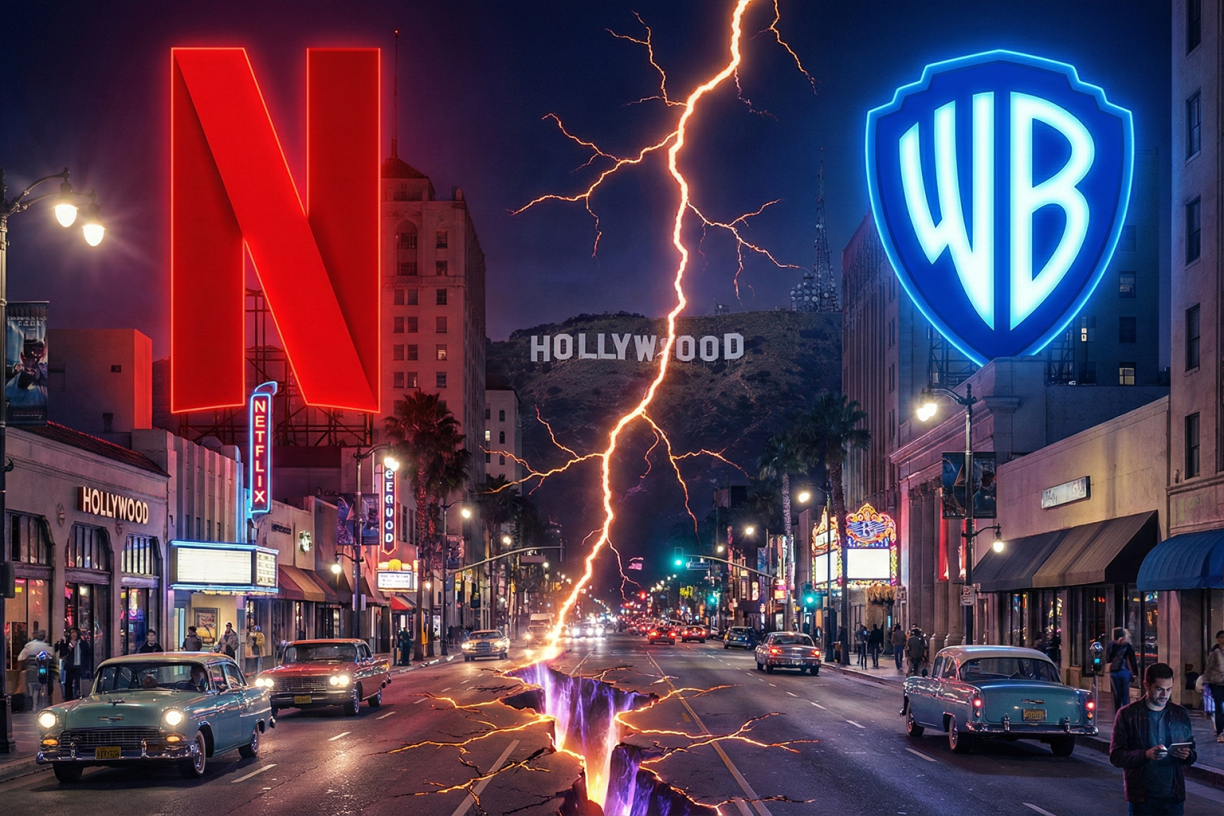
Paramount Skydance has secured the acquisition of Warner Bros Discovery after Netflix declined to raise its competing offer, ending a months-long contest for control of one of Hollywood’s most influential studios.
Netflix confirmed it would not match Paramount Skydance’s latest proposal, stating the transaction was “no longer financially attractive” at the required price. The decision effectively concluded the bidding process and positioned Paramount Skydance as the winning party in the sale of Warner Bros Discovery.
Who Is Skydance and Why This Deal Matters
Skydance Media was founded by David Ellison, son of Oracle co-founder Larry Ellison. Over the past decade, the company has grown from a film production house into a diversified media enterprise spanning film, television, animation, and interactive entertainment.
Skydance has been behind major global franchises, including Mission: Impossible and Top Gun: Maverick, while expanding into streaming-era production through Skydance Television and Skydance Animation. The company has also built strategic financial backing through investment firms such as RedBird Capital and KKR, strengthening its capacity for large-scale transactions.
Until now, Skydance operated largely as a production and financing partner to major studios. Acquiring Warner Bros Discovery marks a shift from supplier to owner, placing the company at the center of one of the world’s most powerful studio portfolios.
What Warner Bros Discovery Adds
Warner Bros Discovery controls an extensive range of assets across entertainment and news. Its portfolio includes the Warner Bros film studio, HBO’s premium programming operation, CNN’s global news network, DC intellectual property, and one of the industry’s largest film and television libraries.
The acquisition significantly expands Paramount Skydance’s scale across content creation, distribution, and global licensing. It also provides deeper influence over streaming infrastructure and advertising-supported platforms at a time when media companies are recalibrating their business models.
Ownership of HBO strengthens the premium scripted segment, while control of CNN introduces a major news asset into the group’s portfolio. Although editorial structures typically remain operationally separate, consolidation of news and entertainment properties often draws regulatory attention.
Netflix’s Strategic Withdrawal
Netflix’s decision not to increase its offer reflects continued financial discipline as the streaming industry moves beyond rapid expansion into a more mature phase. The company indicated that matching the improved Paramount Skydance bid would not meet its return expectations.
The withdrawal signals a strategic choice: prioritizing internal content development and controlled capital allocation over a transformative studio acquisition. While Netflix remains the world’s largest streaming platform by subscriber base, it has increasingly emphasized profitability and operational efficiency.
Industry Implications
The outcome underscores a broader shift underway in global media. Subscriber growth has slowed across major streaming markets, prompting companies to focus on scale, cost control, and library ownership. Intellectual property and long-term content control are becoming central to competitive positioning.
The Warner Bros acquisition consolidates significant cultural and commercial assets under Paramount Skydance’s leadership and accelerates the restructuring of traditional Hollywood ownership models.
What Happens Next
With the competitive bidding phase concluded, attention now turns to regulatory review and integration planning. Authorities may assess the transaction for competition and market concentration concerns depending on jurisdictional requirements.
If approved, the deal will reshape leadership influence across film, television, and news media, marking one of the most consequential studio consolidations in recent years.