 Executive Opinion (Thought Leadership)
 Google Enables Tracker Location Sharing with Airlines via Find Hub

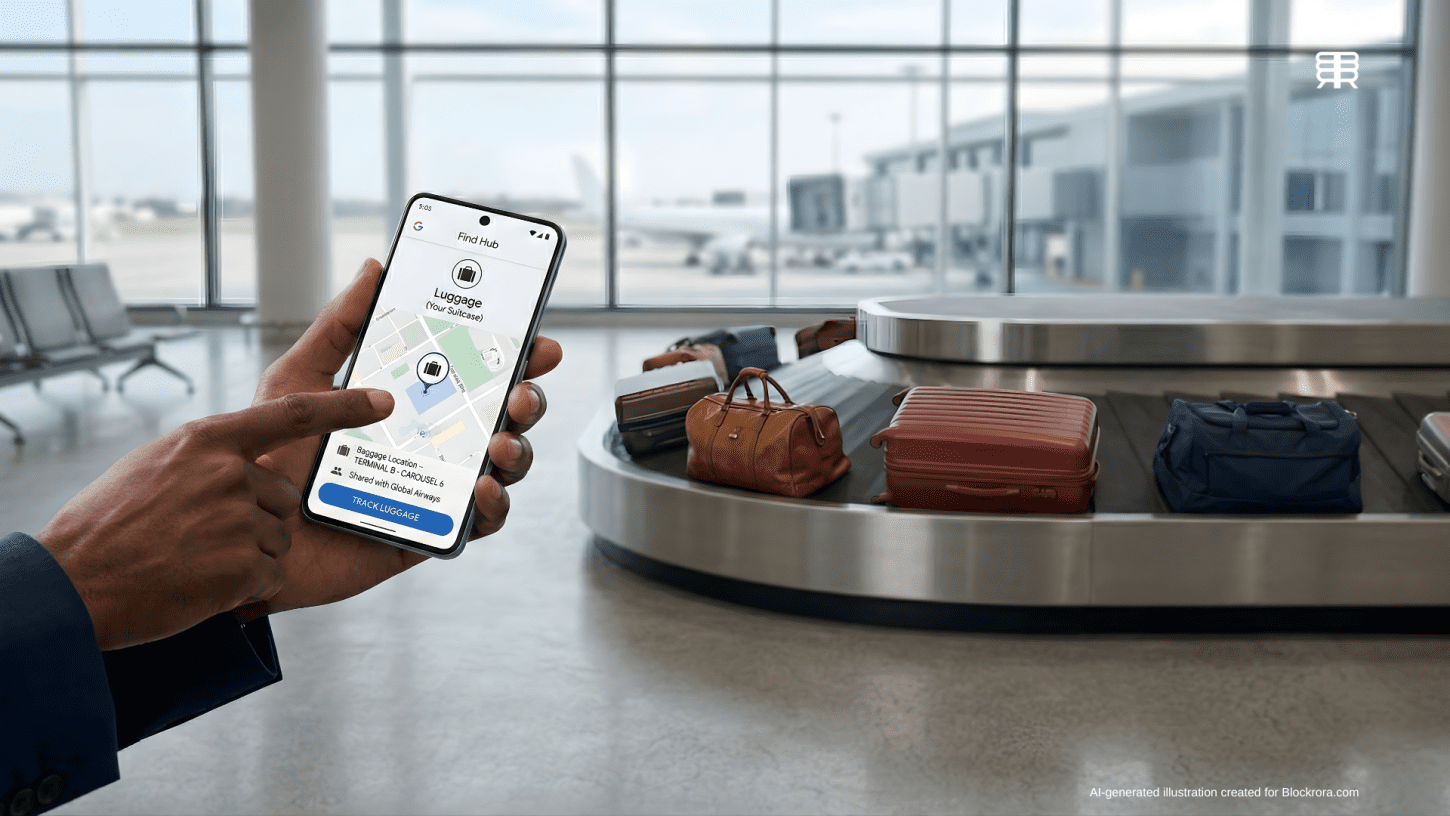
Google has officially launched a new feature for Android’s Find Hub that allows users to securely share the real-time location of tracker tags with airlines. The update aims to reduce baggage recovery times by integrating user-generated tracking data directly into global airline recovery systems. This rollout marks a significant expansion of the Find My Device network’s utility beyond personal device recovery.
The Mechanism: Secure Link Sharing
Under the new system, Android users can generate a unique, secure URL within the Find Hub app for any compatible tracker tag placed inside their luggage. This link provides a temporary view of the item’s location on a map. Travelers can then provide this link to airline staff via official mobile apps or customer service portals when filing a lost baggage claim.
To maintain user privacy, Google has implemented several safeguards:
- Automatic Expiry: Shared links automatically expire after seven days.
- Reunion Termination: Sharing is instantly disabled once the tracker is back within range of the owner’s smartphone.
- Manual Control: Users retain the ability to revoke access to the link at any time from the Find Hub interface.
Global Airline and Infrastructure Integration
The feature’s effectiveness relies on high-level integration with existing aviation infrastructure. Google collaborated with SITA and Reunitus to ensure that Find Hub data is compatible with WorldTracer and NetTracer, the industry-standard systems used by over 500 airlines at thousands of airports globally.
At launch, more than 10 major global carriers have integrated the feature into their recovery processes, including:
- Lufthansa Group (including Swiss, Austrian, and Brussels Airlines)
- Air India
- Turkish Airlines
- Scandinavian Airlines (SAS)
- China Airlines
Qantas is also confirmed to be joining the initiative in the coming months. Furthermore, Samsonite has announced plans to embed Find Hub technology directly into select upcoming luggage lines, eliminating the need for standalone tracker tags.
Industry Context and Digital Policy
This move brings Android into direct competition with Apple’s “Share Item Location” feature, which launched recently for AirTags. By standardizing how location data is shared with third-party corporations, Google is addressing a long-standing friction point in travel logistics.
From a digital policy perspective, the encrypted nature of the Find My Device network remains intact; airlines do not receive permanent access to the user’s account, only a sandboxed view of the specific lost item. This approach aligns with emerging global data privacy standards regarding “least-privileged access” for corporate entities.
What’s Next for Find Hub
The integration of Find Hub into airline operations suggests a shift toward a more interconnected Internet of Things (IoT) ecosystem. As more hardware manufacturers, such as Samsonite, adopt the protocol, reliance on third-party dongles may decrease in favor of native tracking. Market analysts expect other major US and Middle Eastern carriers to announce support for the protocol by the end of 2026 to stay competitive with the early adopters in the Lufthansa and Turkish Airlines groups.