Airtel Africa Signs Deal With SpaceX to Launch Starlink Direct-to-Cell in 14 Countries

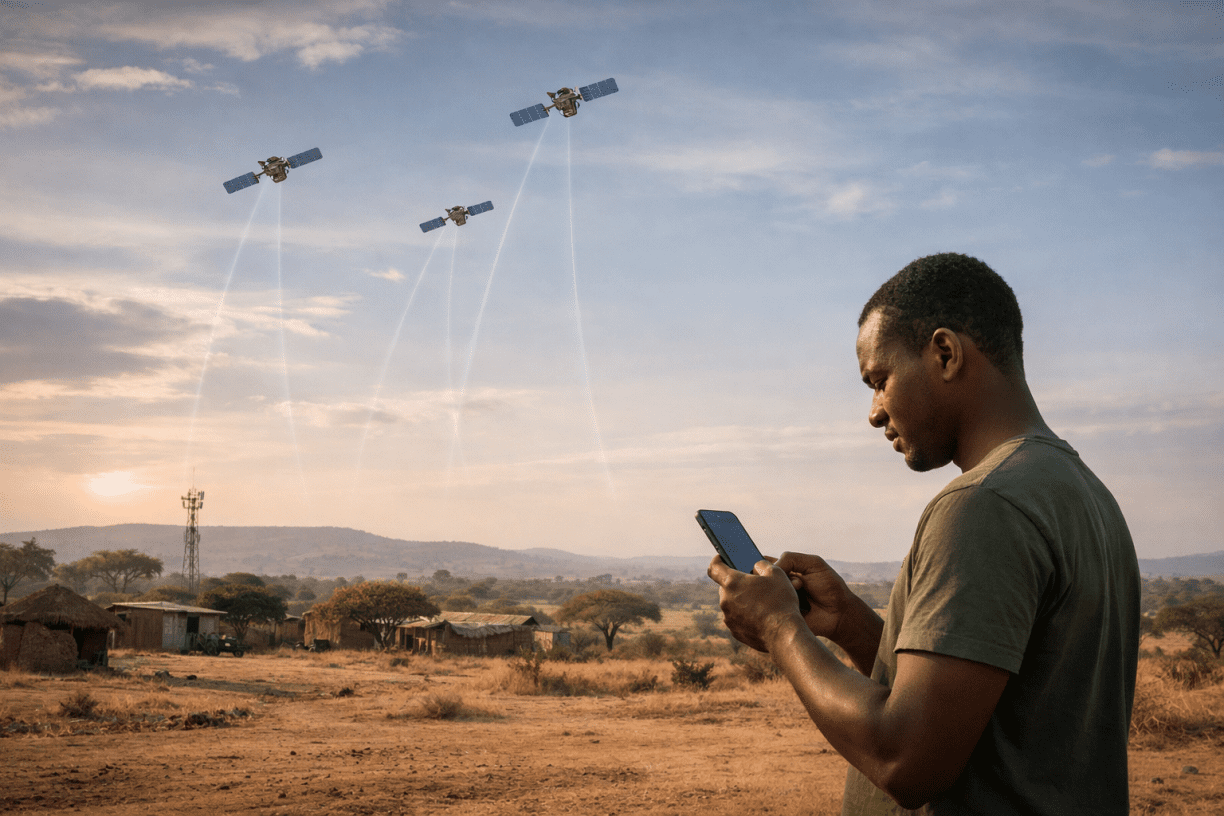
Airtel Africa has signed an agreement with SpaceX to roll out Starlink Direct-to-Cell satellite connectivity across 14 African markets, marking the first time the technology will be deployed by a mobile network operator on the continent. The deal, confirmed on December 16, 2025, aims to extend mobile connectivity to areas that currently lack terrestrial network coverage.
The partnership will allow Airtel customers with compatible smartphones to connect directly to Starlink satellites, providing basic mobile services in regions where building traditional infrastructure is not economically viable.
What the Airtel–SpaceX Agreement Covers
Under the agreement, Airtel Africa will integrate Starlink’s low-Earth orbit (LEO) satellite technology into its existing mobile network operations. The service is designed to work with standard 4G-enabled smartphones, meaning users will not need to purchase new devices to access satellite-based connectivity once it becomes available.
The rollout is expected to span Airtel’s operating markets, including Nigeria and other regions where coverage gaps persist as a significant challenge. Regulatory approval will be required in each country before services can go live.
How Starlink Direct-to-Cell Works
Starlink Direct-to-Cell uses a constellation of approximately 650 next-generation LEO satellites capable of communicating directly with mobile devices. Unlike traditional satellite phones, the system is designed to function as an extension of existing mobile networks, rather than a standalone replacement.
According to Airtel Africa, the upgraded broadband Direct-to-Cell system is expected to deliver data speeds significantly higher than earlier satellite-to-mobile solutions, enabling basic data services alongside messaging during the initial phase.
Planned Rollout Timeline
The satellite-to-mobile service is scheduled to begin rolling out in 2026. Early stages will support text messaging and limited data services for selected applications. Voice calling and Internet of Things (IoT) connectivity are expected to follow at a later stage, in line with Starlink’s previously stated roadmap.
SpaceX successfully demonstrated the technology’s capabilities in January 2024, when it sent and received its first text messages using Direct-to-Cell satellites.
Addressing Africa’s Connectivity Gaps
The partnership aims to address one of the telecom industry’s longstanding challenges: expanding coverage to sparsely populated or remote regions. Building and maintaining mobile towers in such areas often comes with high capital expenditure and limited commercial return.
By relying on orbital infrastructure instead of physical network expansion, Airtel aims to improve service availability while avoiding the costs associated with extensive tower deployment. Airtel Africa Managing Director and CEO Sunil Taldar said the collaboration would help establish a more consistent level of service across the company’s markets.
Starlink Vice President of Sales Stephanie Bednarek added that the agreement would help bring connectivity to remote parts of Africa that remain beyond the reach of traditional terrestrial networks, with potential benefits to essential services.
Broader Implications for Mobile Connectivity
With an estimated 174 million customers across its footprint, Airtel Africa positions the satellite service as a complement to its existing terrestrial networks rather than a replacement. The move reflects a broader industry shift, where Direct-to-Device (D2D) satellite technology is transitioning from emergency-only use cases toward wider commercial deployment.
If regulatory approvals proceed as planned, the Airtel–SpaceX deal could serve as a reference point for other mobile operators exploring hybrid terrestrial-satellite models to expand coverage across emerging markets.