Australia Just Rewrote the Rules of Social Media – The World Is Watching

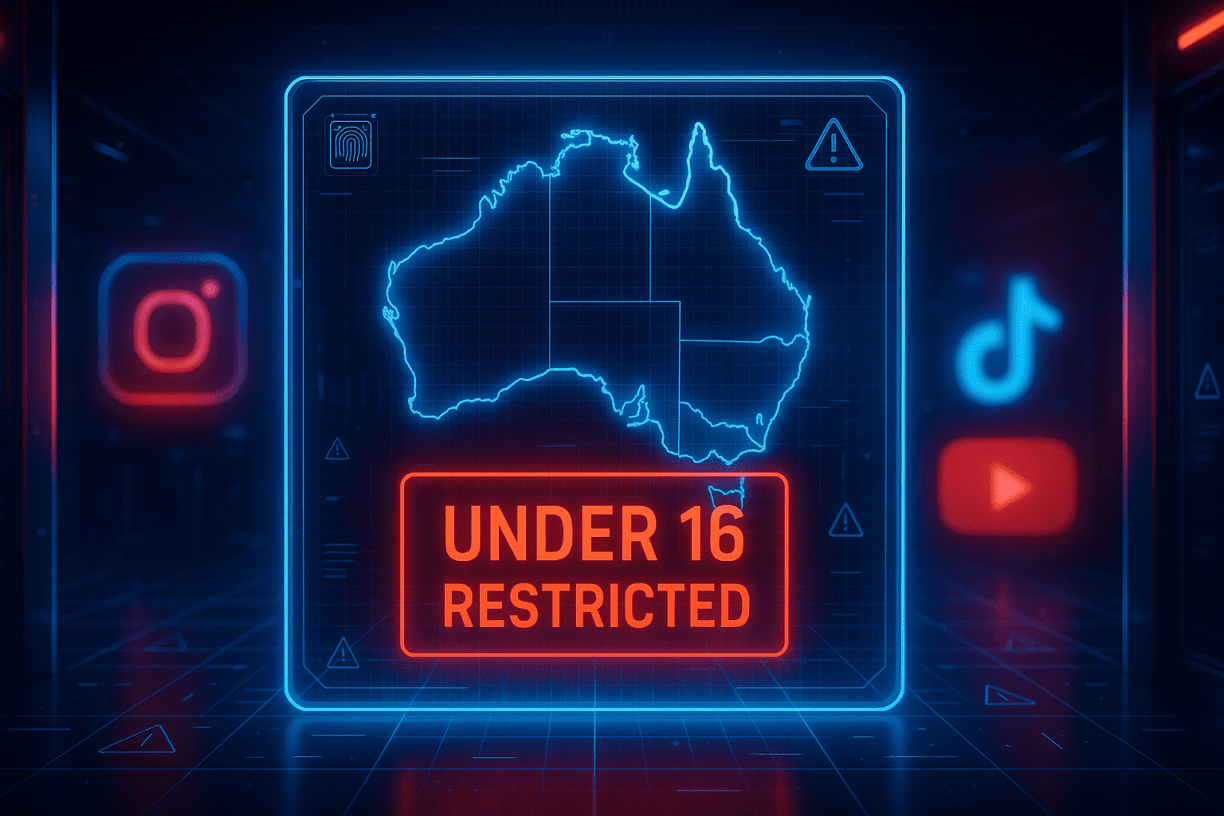
Starting 10 December 2025, Australia will enforce one of the toughest social media regulations globally, activating a nationwide age ban that compels major platforms to block all users under 16. The law, unprecedented in scope, targets 10 of the biggest platforms, including Instagram, YouTube and TikTok, and threatens fines of up to A$49.5 million for companies that fail to comply. What began as a national safety initiative has quickly become a global test case for how far governments are willing to go to rein in Big Tech.
A Regulatory Line in the Sand
For years, lawmakers worldwide have grown increasingly frustrated with Meta, Google, ByteDance and other tech giants for failing to meaningfully curb online harm. Australia has now made the first decisive move, setting an age threshold higher than any other major jurisdiction and removing the option for parental consent altogether.
Officials describe the ban as a “live experiment” that other nations can study and copy. That’s already happening. Governments in Denmark, Brazil, Norway, Singapore, Fiji, Greece, Malta, and multiple U.S. states are reportedly evaluating similar legislation. The U.K., which already restricts under-18 access to online pornography, said it is “closely monitoring Australia’s approach.”
The global domino effect is underway.
The Catalyst: Big Tech’s Lost Trust
The turning point arrived four years ago when leaked internal Meta documents showed the company knew its platforms harmed teenagers, contributing to body-image issues and suicidal thoughts while publicly downplaying the risk.
Since then, the scrutiny has intensified. In the U.S., hundreds of lawsuits now accuse Meta, YouTube, TikTok and Snapchat of designing their platforms to be intentionally addictive and concealing known safety risks.
While in Australia, the government decided this cycle could no longer continue.
How the Ban Works
The law requires platforms to take “reasonable steps” to detect and remove users under 16. That includes deploying age-verification technologies such as:
- Age inference (predicting age based on behaviour, writing style, or activity)
- Age estimation (using a selfie to determine estimated age)
- ID-based verification
- Verification via linked financial accounts
Every major platform involved, except X, owned by Elon Musk, has agreed to comply.
Musk’s stance has been the most confrontational. He claims the law is “a backdoor way to control access to the internet by all Australians.” Others, like Meta and Snap, are attempting to shift responsibility to Apple and Google, arguing that app stores should handle age checks.
Industry trade group NetChoice has condemned the ban as “blanket censorship” that could leave youth “less informed and less prepared for adulthood.”
The Hidden Threat: A Disrupted User Pipeline
While Big Tech argues publicly that under-16 users do not generate significant revenue, insiders know the deeper threat: growth pipelines.
Before the ban, 86% of Australians aged 8 to 15 used social media. Cutting off that demographic creates what analysts call structural stagnation, a long-term slowdown of platform adoption. As platforms mature, young users form the foundation of future engagement, creator ecosystems and cultural influence.
Australia has now severed that pipeline.
And even with multi-million-dollar penalties, the largest firms may simply absorb the cost. For companies like Meta and Google, A$49.5 million represents little more than a minor operational expense.
“Safer” Youth Versions Aren’t Enough
In anticipation of government pressure, some companies released youth-focused experiences, Instagram Teen accounts, Snapchat’s child-friendly modes, and stricter privacy defaults. But critics remain unimpressed.
One internal study, led by a Meta whistleblower, found nearly two-thirds of Instagram’s Teen safety features were ineffective or easily bypassed. In other words, the trust gap remains.
A New Global Baseline for Tech Governance
Australia’s move changes the calculus for every nation debating online safety. Whether or not the policy proves flawless is, in some ways, irrelevant. Lawmakers increasingly believe that imperfect regulation is better than no regulation at all.
As one expert from the University of Sydney’s Centre for AI, Trust and Governance put it:
“The days of social media being seen as a platform for unbridled self-expression are coming to an end.”
The world is shifting from laissez-faire digital freedom toward controlled digital governance, and Australia, willing or not, has become the test case for how far nations can go.
For Big Tech, this is no longer just a policy challenge. It’s the beginning of a new era where governments, not algorithms, set the rules.