The Inference Era: Microsoft’s Maia 200 Escalates the Silicon Arms Race

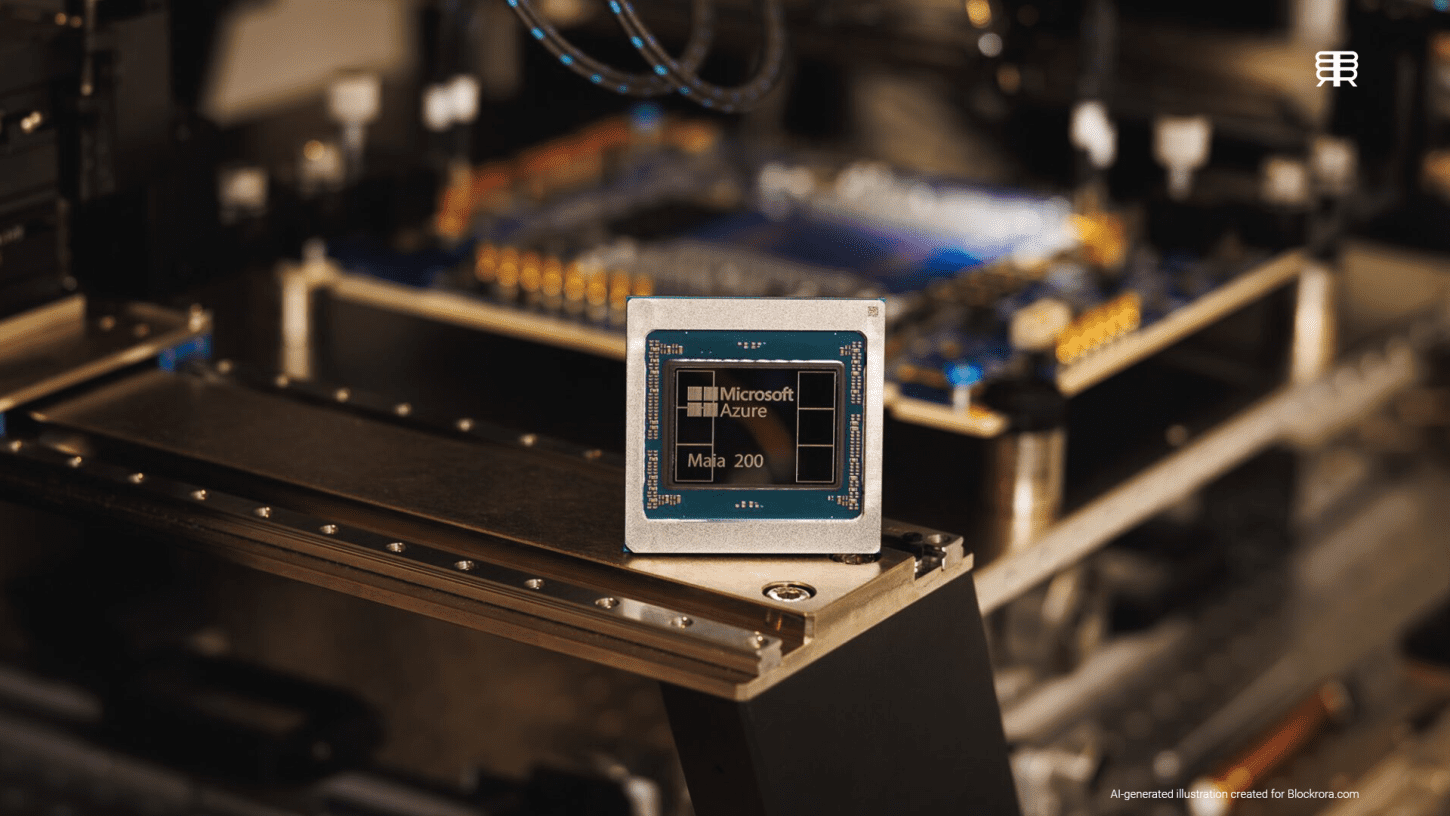
Microsoft has entered the next phase of the AI hardware war with the launch of Maia 200, a custom-designed silicon chip built specifically to reduce the mounting costs of large-scale AI inference.
Unveiled on January 26, 2026, Maia 200 is not aimed at training frontier models from scratch. Instead, it targets what has quietly become the most expensive layer of modern AI: running models at scale, continuously, across real-world products. In doing so, Microsoft joins Google and Amazon in a growing push to loosen the industry’s dependence on Nvidia-dominated GPU infrastructure.
Built for Inference, Not Experimentation
Maia 200 is the successor to Microsoft’s Maia 100, first introduced in 2023, and represents a significant architectural leap. The chip is reported to contain more than 100 billion transistors and is optimized for low-precision workloads, where efficiency matters more than raw flexibility.
According to Microsoft, Maia 200 delivers:
- Over 10 petaflops at 4-bit precision (FP4)
- Around 5 petaflops at 8-bit precision (FP8)
These formats are increasingly favored for inference tasks, where models generate responses rather than learn new patterns. Microsoft says a single Maia 200 node can support today’s largest deployed models, while leaving headroom for future scale.
The chip is already powering internal systems such as Copilot and workloads from Microsoft’s Superintelligence group. Access is now being extended to select developers and frontier AI labs through an SDK.
A Direct Shot at Hyperscaler Rivals
Microsoft’s announcement was notable not just for its specifications, but for how openly it framed Maia 200 as a competitive response.
The company claims Maia 200 delivers:
- Three times the FP4 performance of Amazon’s third-generation Trainium
- Higher FP8 performance than Google’s seventh-generation TPU
While independent benchmarks have yet to validate these claims, the message is clear: custom inference silicon is no longer experimental — it’s strategic.
From Training Obsession to Deployment Reality
The broader industry context explains why inference-focused chips are suddenly front and center.
By late 2025, AI workloads began shifting away from headline-grabbing training runs toward high-volume deployment. Agents, copilots, chatbots, and automated decision systems now operate continuously, turning inference into a recurring operational cost rather than a one-time expense.
Power efficiency, latency, and cost per query have become the new bottlenecks — and general-purpose GPUs are often overkill for these tasks.
Hyperscalers Close the Loop
Microsoft’s move completes a rapid sequence of custom silicon releases from the major cloud providers:
- Google rolled out its seventh-generation TPU, Ironwood, in November 2025. The chips are already deployed at scale, with AI firm Anthropic planning to use up to one million TPUs for its Claude models.
- Amazon followed in December 2025 with Trainium3, alongside the Graviton5 CPU, emphasizing efficiency gains across both AI and general cloud workloads.
Together, these releases reflect a shared objective: reducing reliance on external GPU supply chains.
Escaping Nvidia’s Gravity
Despite these efforts, Nvidia still controls more than 90% of the AI accelerator market. Its GPUs remain unmatched in versatility and developer ecosystem support.
However, that dominance comes with trade-offs. High margins, limited supply, and long procurement cycles have pushed hyperscalers to pursue what analysts increasingly call “silicon sovereignty” — ownership over the most expensive layers of their infrastructure stack.
Custom ASICs like Maia, TPUs, and Trainium don’t aim to replace Nvidia outright. Instead, they siphon off the most predictable, high-volume workloads where efficiency gains translate directly into margin improvements.
Why the Inference Era Matters
Maia 200 signals that AI competition is no longer just about model quality or parameter counts. The real battleground is now economics at scale.
As AI becomes embedded in everyday business functions — from fintech and customer support to policy analysis and enterprise automation — the cost of each response matters. Inference efficiency increasingly determines whether AI products are profitable, sustainable, or even viable.
While Nvidia remains the backbone of cutting-edge experimentation, the rise of specialized inference silicon points to a more fragmented, cost-optimized future for AI infrastructure. For cloud providers and AI labs alike, the message is clear: the next gains won’t come from bigger models alone, but from running them smarter.