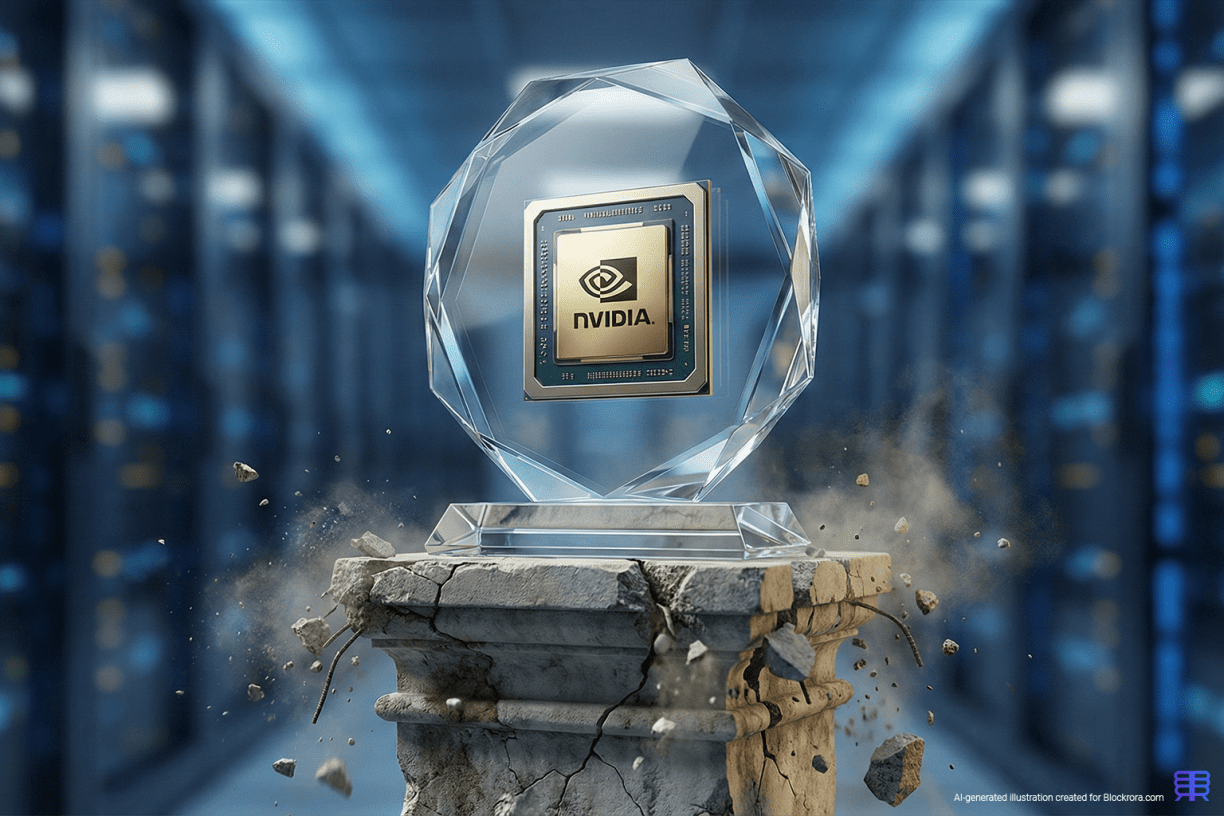
Nvidia Strikes Back: Chipmaker Defends $4.5T Valuation Amid Rising Skepticism.

Nvidia has launched an extensive defence campaign across Wall Street and social media as the world’s most valuable semiconductor company faces intensified scrutiny from investors, analysts, and major technology rivals. The company, valued at nearly $4.5 trillion, is working to counter claims that its financials, margins, and market dominance may not be as stable as investors believe them to be.
The pushback includes a detailed memo addressed to sell-side analysts, public statements responding to online criticism, and a rare attempt to openly clarify its accounting practices following days of heightened market pressure.
Nvidia Confronts Financial Criticism Head-On
The memo, published in full by Bernstein, addresses a wave of concerns that emerged after an anonymous Substack author, using what they called “AI-driven financial analysis,” alleged that Nvidia’s customers were struggling to pay for orders and that inventories were accumulating across the supply chain.
Nvidia rejected the claims point by point, citing publicly available filings to argue that its financials are stable and should not be compared to historic corporate fraud cases, such as Enron, WorldCom, or Lucent.
One area where Nvidia acknowledged challenges was the Blackwell GPU line, admitting that the new architecture currently introduces lower gross margins and higher warranty expenses due to its complexity. Even so, the company reiterated that demand for its GPUs remains strong, especially among hyperscalers and enterprise AI customers.
Competition from Major Customers Escalates
The defensive stance emerged just as competitive pressure reached a new high. A report from The Information suggested that Meta is exploring a strategic move to adopt Google’s internal AI chips, positioning them directly against Nvidia’s flagship accelerators.
Nvidia issued a public statement on X shortly after the report, congratulating Google on its progress while insisting its own chips remain “a generation ahead.” The unusually direct comment quickly sparked criticism from industry observers who questioned why the chipmaker was publicly engaging a customer that also represents a key competitor.
Google DeepMind researcher Susan Zhang called the response inappropriate, writing: “Surely someone at Nvidia sees how bad this looks … right?” A sentiment amplified by thousands of engagements online.
The market responded swiftly. Nvidia’s stock weakened in the aftermath of the Meta-Google report, highlighting how sensitive investors have become to potential cracks in its dominance of the AI chip sector.
Analysts View the Memo as a Turning Point
The Bernstein-published memo marks one of the most extensive direct responses Nvidia has provided to critics in recent years. Analysts note that this shift toward public rebuttal is unusual, especially for a company historically known for letting performance speak for itself.
But as Nvidia faces growing competition from Amazon, Google, AMD, and internal AI accelerators being developed by Cloud providers, pressure has mounted to maintain investor confidence while addressing speculation around sustainability, margins, and market share.
Global Context: The AI Hardware Arms Race Intensifies
The escalation of tensions around Nvidia’s valuation comes against a backdrop of intensified global investment in AI hardware. Major hyperscalers are rapidly increasing in-house chip development as they seek to reduce reliance on Nvidia’s GPUs and lower long-term costs.
Meanwhile, the semiconductor industry is entering a phase of structural uncertainty:
- Regulators are scrutinising GPU supply concentration
- Enterprise AI adoption timelines remain unpredictable
- Competition from custom silicon is rising across the U.S. and Asia
- Global chip manufacturing capacity is shifting toward strategic hubs
Nvidia’s public rebuttal reflects the balancing act required to maintain investor trust in a market where AI demand, while enormous, is becoming increasingly fragmented.
Why This Matters
Nvidia’s defence campaign signals a pivotal moment for the company and the broader AI ecosystem:
- Investors are becoming more sensitive to valuation risks
- Hyperscaler chip independence threatens future revenue
- Public criticism now moves markets faster than formal earnings calls
- Nvidia can no longer assume default dominance in AI chips
With AI hardware at the heart of both global innovation and geopolitical competition, the company’s ability to maintain leadership is critical for the broader tech sector.
What Happens Next
Industry analysts expect:
- More transparency from Nvidia in future earnings reports
- Further announcements around Blackwell margins and costs
- Heightened scrutiny as competitors accelerate chip development
- Possible market volatility as hyperscaler alliances shift
For now, Nvidia’s message is clear: the company intends to maintain its leadership despite rising skepticism and is prepared to defend its position more openly than ever before.