Starlink Satellite Failure Creates Debris, Renewing Concerns Over Orbital Congestion

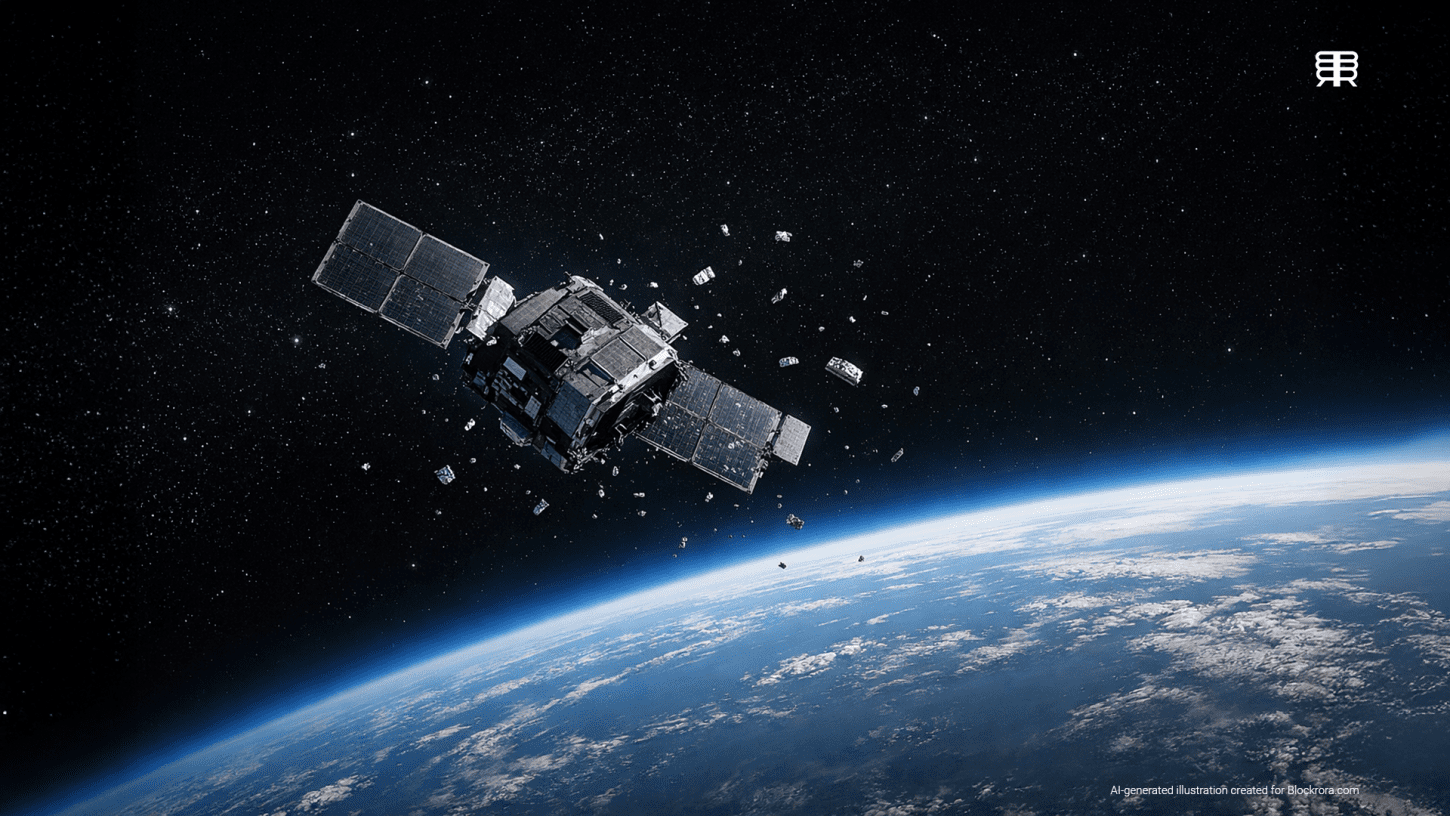
A satellite operated by Starlink, SpaceX’s satellite internet division, has experienced a rare orbital failure, resulting in the generation of debris in low Earth orbit. The incident has renewed scrutiny over the growing congestion in space as thousands of new satellites are deployed each year.
The malfunction occurred on Wednesday, December 17, 2025, at an altitude of approximately 418 kilometers, severing communications with the spacecraft and triggering an unexpected drop in altitude.
What Happened to the Starlink Satellite
According to a statement from SpaceX, the satellite experienced an “orbital anomaly” that caused it to descend rapidly by roughly four kilometers. While the company has not disclosed the precise cause, the sudden change in altitude suggests an internal failure rather than an external collision.
Space-tracking firm LeoLabs reported detecting “tens” of debris fragments shortly after the incident. Analysts at LeoLabs noted that the event’s characteristics point to an onboard malfunction, rather than an impact with another object already in orbit.
SpaceX described the debris field as limited in scale and confirmed it is working with NASA and the U.S. Space Force to monitor the situation.
Current Status of the Spacecraft
Despite the failure, the satellite remains largely intact but is tumbling and no longer operational. Starlink confirmed via posts on X that the spacecraft is expected to re-enter Earth’s atmosphere and fully burn up within weeks, reducing the long-term risk posed by the debris.
The loss represents a small fraction of the Starlink constellation, which now numbers close to 10,000 satellites. Industry experts have noted that while the incident is concerning, it is significantly smaller in scale than previous events, such as the breakup of an Intelsat satellite, which produced more than 700 debris fragments, or the disintegration of a Chinese rocket body in 2024.
Orbital Congestion and Rising Coordination Risks
The incident comes as low Earth orbit becomes increasingly crowded. Governments and private companies are racing to deploy large satellite constellations for broadband connectivity, Earth observation, and military applications, sharply increasing the density of objects circling the planet.
Tensions over orbital coordination have intensified in recent weeks. SpaceX previously warned that a spacecraft from a Chinese mission passed within approximately 200 meters of a Starlink satellite, a near-miss that raised alarms about the lack of coordination between operators.
Michael Nicolls, SpaceX’s Vice President of Starlink Engineering, said the encounter highlighted what he described as the primary risk in space operations: insufficient communication and deconfliction between satellite operators. He warned that without clearer international traffic rules, the likelihood of close approaches and accidental collisions will continue to rise.
Why the Incident Matters
While the immediate debris risk from this event appears limited, it underscores broader concerns about sustainability in low Earth orbit. Even small debris fields can pose hazards to operational satellites, forcing evasive maneuvers that consume fuel and shorten a spacecraft’s lifespan.
Regulators and industry leaders have increasingly called for stronger international frameworks governing satellite deployment, maneuver coordination, and debris mitigation. As competition in space accelerates, particularly between the United States and China, the challenge of managing orbital traffic is becoming a central issue for the global technology and aerospace sectors.
What Comes Next
SpaceX is expected to continue monitoring the debris and share tracking data with other satellite operators. Longer term, the incident is likely to add momentum to discussions around global space traffic management standards, including mandatory coordination protocols and stricter post-mission disposal requirements.
As satellite constellations expand, incidents like this Starlink failure highlight the delicate balance between technological progress and the growing need to protect the orbital environment on which modern communications increasingly depend.