Alphabet Taps Europe's Bond Market for €6 Billion as AI Spending Questions Grow
Alphabet raised €6 billion in euro bonds with orders above €17 billion, but paid far more than in May, a sign that funding Big Tech's AI build-out is getting costlier.
Listen to this article
6 chapters
In this article
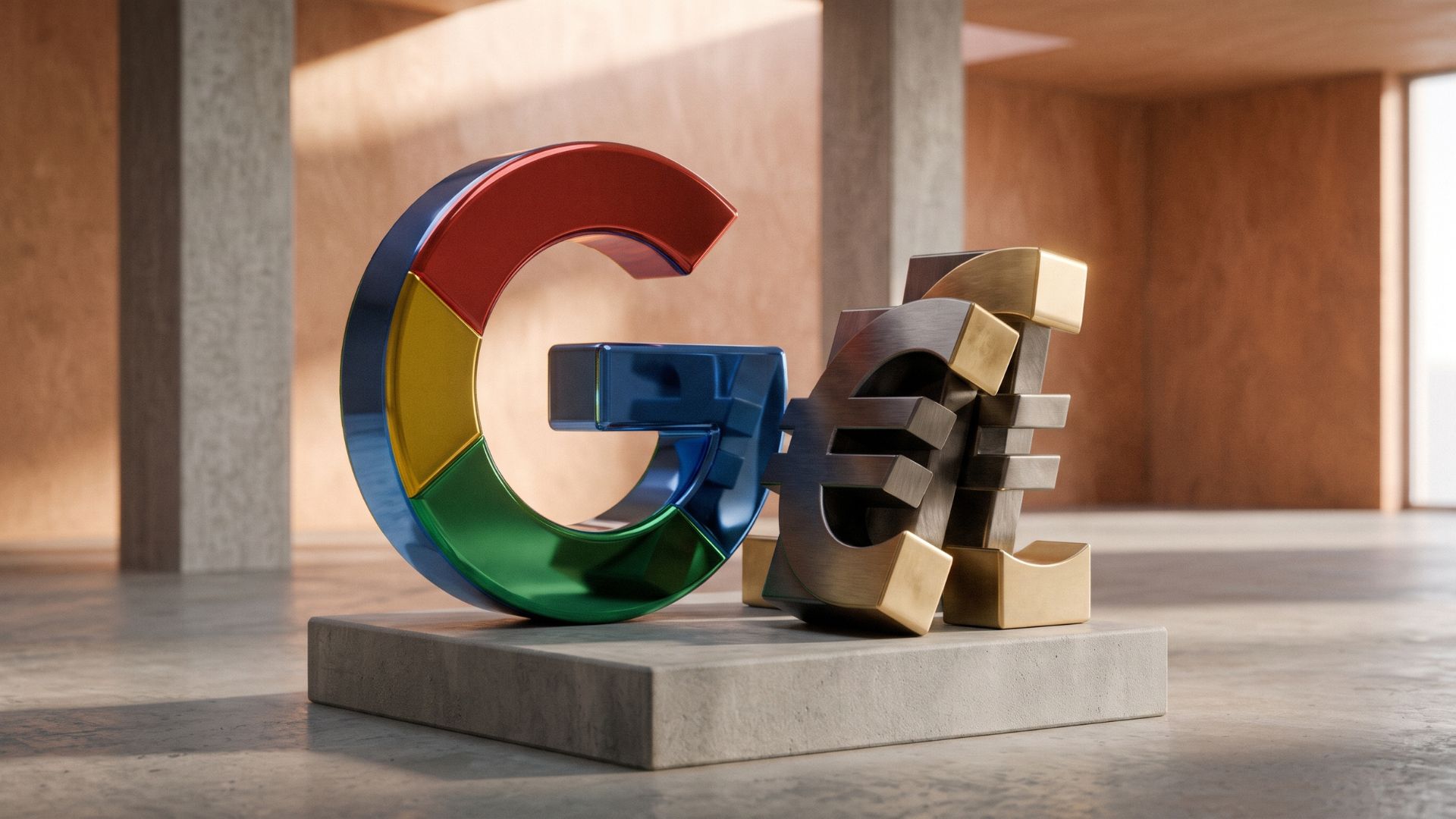
Google's parent raised €6 billion ($6.7 billion) in seven tranches on Monday, 2 November, and drew more than €17 billion in orders, nearly three times what it was selling.
The deal landed just days after Alphabet's shares suffered their worst single day on record. That makes it a live test of a question hanging over every market right now, crypto included: are investors still willing to fund Big Tech's AI build-out, and at what price?
Inside the deal
The money is there, but it costs more than it did six months ago. Alphabet split the €6 billion into one floating-rate note and six fixed-rate notes, running from 2028 out to 2045, according to its pricing term sheet filed with the SEC.
Note | Matures | Size | Coupon |
|---|---|---|---|
Floating rate | 2028 | €750m | 3-month EURIBOR + 0.50% |
Fixed | 2028 | €750m | 3.700% |
Fixed | 2030 | €1.25bn | 4.050% |
Fixed | 2032 | €750m | 4.250% |
Fixed | 2035 | €750m | 4.500% |
Fixed | 2039 | €750m | 4.875% |
Fixed | 2045 | €1bn | 5.250% |
Orders topped €17 billion, and demand was heaviest for the longest 19-year note, Bloomberg reported. That strong book let Alphabet tighten pricing through the day: the 19-year note opened at around 205–210 basis points over mid-swaps and finished at 185.
Even so, Alphabet paid up. Its 2045 notes now carry a 5.25% coupon, against 4.50% on the same maturity sold in May. The spread over swaps on that note widened by 60 basis points in six months, which tells you most of the extra cost is about Alphabet and AI risk, not just higher interest rates.
Barclays, BNP Paribas and Deutsche Bank led the sale. Alphabet says the proceeds are for general corporate purposes, which may include paying down existing debt, Reuters reported. The notes carry top-tier Aa2 (Moody's) and AA+ (S&P) ratings and settle on 5 November.
Why Alphabet keeps coming back for more
Alphabet is now spending more on AI infrastructure than its business brings in. In the third quarter (July–September 2026) it spent $51.4 billion on capital expenditure, more than double the $24 billion of a year earlier, and free cash flow came in at minus $9.1 billion, according to its results. It was the second negative quarter in a row.
Management is not slowing down. Alphabet kept its 2026 capex guidance at $195–205 billion and said spending will rise significantly again in 2027. It has also signed data centre leases worth $130.5 billion in future payments that do not yet sit on its balance sheet, Reuters reported from the SEC filing.
The AI demand is real: Google Cloud revenue doubled to $30.7 billion. But Search, the core money-maker, grew just 12% against the 15% analysts wanted. One analyst quoted by Fortune summed it up as a "how do we pay for it" problem, not a lack of demand.
Investors did not like the answer. Alphabet's shares fell more than 12% on 29 October, their worst day ever, erasing roughly $500 billion in value. The stock lost nearly 19% across October, its worst month on record, while the Nasdaq fell 5%.
Part of a much bigger borrowing wave
Alphabet is not alone. On the same Monday, Oracle filed to sell $10 billion of notes, AIERA noted from Reuters reporting. A few days earlier, Microsoft returned to the US bond market for the first time since 2017, seeking at least $25 billion and drawing more than $115 billion in orders, SBS reported citing Bloomberg.
Hyperscalers have now sold more than $313 billion of investment-grade bonds globally this year, nearly triple last year's total, according to the same report. Alphabet alone has borrowed in dollars, sterling (including a 100-year bond in February), Swiss francs and euros. Monday's deal takes its 2026 euro borrowing to €15 billion.
The split between stock and bond markets is the real story. Equity investors punished Alphabet for cash burn and slowing Search growth. Bond investors, who only need to be repaid over two to 19 years, still lined up nearly three-to-one, but they demanded a higher return to do it. Analysts expect more Big Tech issuance in Europe, where debt markets are deep and liquid, Reuters reported.
Why crypto markets should pay attention
Bitcoin has been moving in step with tech stocks, and tech is wobbling. Bitcoin slipped about 2% to just under $77,000 on Tuesday as a chip selloff pushed the Nasdaq 100 into correction territory, 10% below its peak, CoinCentral reported. It has now closed four red weeks in a row.
Institutional money is pulling back too. US spot bitcoin ETFs saw $399 million in net outflows on 2 November, following $643 million on Friday, the largest single-day outflow in four months. The record $6.3 billion Binance hack is weighing on sentiment as well, but the macro pressure is coming from the same place as Alphabet's: doubts over whether AI spending will pay off.
Alphabet's bond sale is a useful gauge of that risk appetite. Three things stand out for crypto readers:
Money is still flowing, but it is getting pickier. Investors will fund an AA+ borrower nearly three times over, yet they demanded far more yield than in May. When top-tier credit has to pay up, riskier assets usually struggle to attract fresh capital.
Safe yield is competing for the same dollars. A 19-year Alphabet note now pays about 5.3% in euros. That is a solid return for very low default risk, and it raises the bar for speculative assets like altcoins.
AI and crypto infrastructure are increasingly linked. Several bitcoin miners have pivoted to hosting AI data centres. If Big Tech's appetite for data centre capacity cools, or its funding gets more expensive, that business line feels it too.
For now, the signal is mixed rather than bearish. The bond market's message is that it still believes in Big Tech's balance sheets, just not at any price.
The bottom line
Alphabet got its money, but the price of funding the AI build-out has clearly gone up. Its 2045 notes cost 0.75 percentage points more in coupon than six months ago, and the company has signalled even heavier spending in 2027.
Three things to watch next:
How the new notes trade. If they weaken in secondary trading over the coming days, it would suggest investors are still nervous about tech credit.
Who borrows next. Meta has held investor calls for a possible dollar and euro bond sale, FourWeekMBA reported, and Oracle's $10 billion deal is still to price.
Alphabet's Q4 call. Management has promised more detail on 2027 capex, and the size of that number will shape both its stock and its borrowing costs.
For crypto, the takeaway is simple: as long as markets question the return on AI spending, risk assets that trade alongside tech are likely to stay under pressure.
The Morning Brief
Start every day knowing what matters in tech
Six stories chosen by our editors, in your inbox at 06:00 UTC. Free.
Instant notifications in this browser when big news breaks. No email needed, and you can turn them off any time.
See more Blockrora in Google
Make us a preferred source and our stories show up more often in Top Stories.

Founder and Editor at Blockrora. A 20-year veteran of fintech, Web3 ecosystems, and software development, Warren writes on AI infrastructure, decentralised networks, and market reality checks. Trail walker and coffee purist.
More from Warren →