Your Wrist Is Listening: Apple Watch Starts Beta Testing Ambient AI Recaps and Live Rewind
Apple has begun beta testing Live Rewind and Siri Recaps on Apple Watch, ambient AI features that transcribe and summarize nearby speech and test how far users will trust a listening wearable.
Listen to this article
6 chapters
In this article
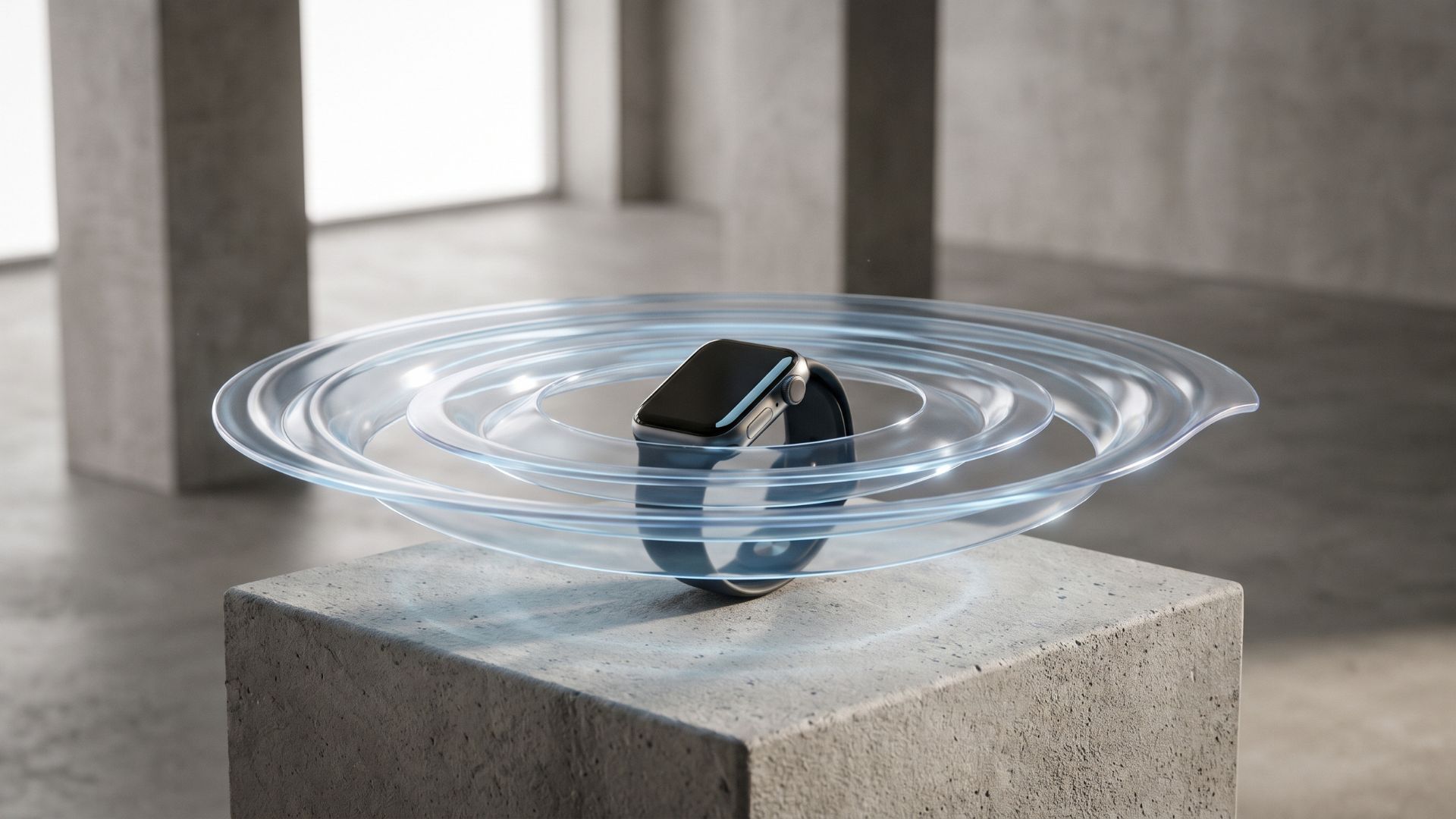
Wearable artificial intelligence has spent years oscillating between clumsy voice dictation and invasive hardware experiments. Now, Apple is testing an ambitious vision for ambient computing on the wrist. In its developer beta cycle, the company began trialing two flagship components of its Audio Intelligence suite for Apple Watch: Live Rewind and Siri Recaps.
The pitch is straightforward: our devices should be attentive enough to catch what we miss in daily life without requiring us to stare into a smartphone screen. Yet by putting an ambient listener on hundreds of millions of wrists, Apple walks a thin line between practical convenience and a digital panopticon, a dilemma tech enthusiasts and decentralized privacy advocates are watching closely.
Catching the Fleeting Word: How Live Rewind Works
Have you ever tuned out for a split second while someone was rattling off gate instructions at an airport, a WiFi password, or an address? Live Rewind is designed specifically for those micro-moments of human distraction.
When enabled, a double-press of the Digital Crown summons a text snippet of what was spoken around you in the preceding 15 seconds. The device transcribes the rolling audio buffer into clear text right on the display, giving you an immediate opportunity to read back what you just missed.
To counter privacy concerns from bystanders, Apple engineered visual and auditory feedback into the trigger:
* Activating Live Rewind plays a mandatory chime from the watch speaker, even if your device is set to silent mode.
* The watch face triggers a microphone animation to signal clearly that ambient speech was just pulled into a transcription view.
* If you take no action, the 15-second text snippet permanently self-destructs roughly 30 seconds after the watch screen dims. You can, however, tap to save it to your Siri notebook or query Siri directly about the context.
Siri Recaps: The Meeting Minutes You Never Took
While Live Rewind functions like a real-time conversational safety net, Siri Recaps is built for longer context.
Operating on an opt-in schedule, such as during active work hours or designated calendar meetings, Siri Recaps monitors conversations passively. Rather than capturing audio files or writing verbatim transcripts, the model extracts high-level synopses. A recap usually appears as a single summary sentence followed by bulleted items with concrete details: delivery dates, task assignments, agreed prices, and deadlines.
The feature is intentionally stripped of tone, sentiment, and voice identification. Sensitive data such as login credentials, passport IDs, credit card numbers, and self-harm language is filtered out before the note ever reaches the screen. Recaps are stored temporarily, prompting you at the end of the day to review what to keep; anything unflagged purges automatically after seven days.
The Architecture: Exclave, iPhone, and Cloud
To convince users (and regulators) that ambient listening won't turn watches into wiretaps, Apple has structured its processing pipeline across three distinct layers:
1. Audio Ingestion - S-Series Chip (Secure Exclave): Sound is piped into an isolated hardware buffer. Raw audio cannot be inspected by watchOS, third-party apps, or Apple, and is purged immediately after processing.
2. Local Transcription - Paired iPhone (Apple Intelligence): Encrypted audio tokens travel locally to the iPhone, which extracts text, removes verbal fillers, and strips biometric vocal signatures.
3. Summarization & Sync - Private Cloud Compute & iCloud: Condensed text is sent to Private Cloud Compute for summary generation. Saved notes sync across devices via end-to-end encryption, with keys held exclusively by the user.
Because Apple does not store raw audio or possess decryption keys for synchronized notes, the company confirmed it cannot produce conversational logs even if served with third-party subpoenas.
The Web3 Take: Can We Trust Big Tech’s Ambient Ears?
For the tech and blockchain community, Apple’s foray into ambient audio highlights the ongoing battle over data sovereignty.
On one hand, Apple’s architecture shows genuine hardware-level security. Isolating audio into hardware enclaves, leveraging verifiable Private Cloud Compute nodes, and enforcing end-to-end encryption are major steps forward compared to traditional cloud-streaming voice assistants. It sets a strong privacy benchmark for consumer wearables.
Even with those safeguards, the system still asks for a massive leap of faith. You are trusting Apple’s word that its closed software works exactly as promised behind locked doors. For advocates of digital privacy and Web3, true data ownership doesn't come from corporate promises or sealed ecosystems; it comes from open-source transparency and code anyone can independently verify.
Moreover, two-party consent laws and social dynamics will face a stress test. While Apple added an audible chime for Live Rewind, Siri Recaps functions quietly in the background without an auditory beacon. In conference rooms, coffee shops, and negotiations, the knowledge that someone's watch may be digesting the room's dialogue could spark friction.
Looking Ahead
Ambient AI is shifting away from awkward smart glasses and dedicated pins toward the hardware we already wear every day. As Live Rewind and Siri Recaps advance through developer betas, Apple is making a calculated bet: if privacy controls feel airtight enough, consumers will gladly let their devices listen in exchange for an effortless, augmented memory.
Whether society at large embraces ambient audio or pushes back against an always-aware wristpiece will shape the trajectory of personal AI for the rest of the decade.
Topics
The Morning Brief
Start every day knowing what matters in tech
Six stories chosen by our editors, in your inbox at 06:00 UTC. Free.
Instant notifications in this browser when big news breaks. No email needed, and you can turn them off any time.
See more Blockrora in Google
Make us a preferred source and our stories show up more often in Top Stories.

Editor and Writer at Blockrora. Backed by years in mainstream tech and health tech development, Lauren covers digital health, tech adoption, and the societal shifts shaping the web. Wellness advocate and coastal wanderer.
More from Lauren →