


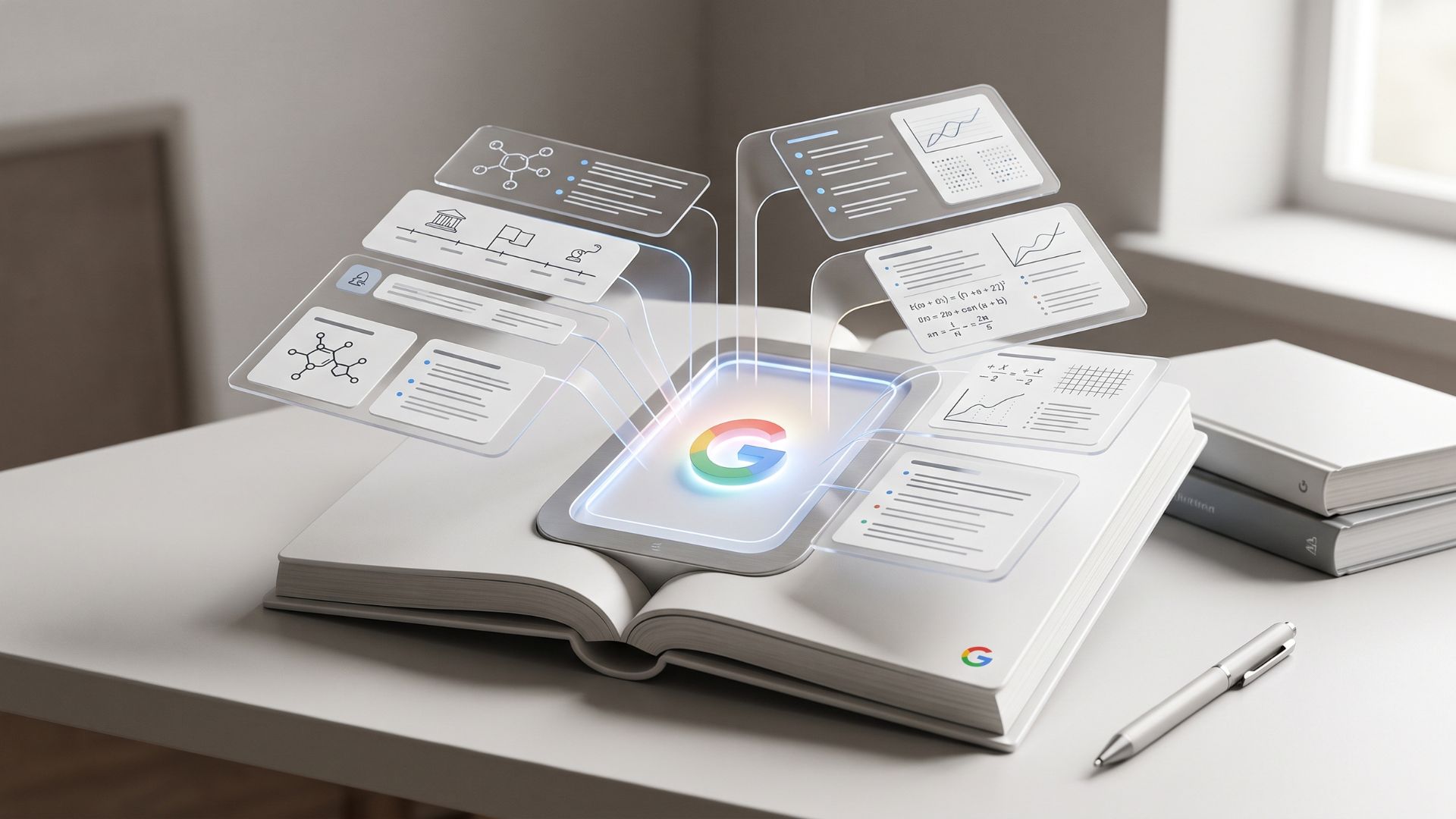
As the back-to-school season kicks into gear, Google is making a major move to solidify its place inside the classroom and dorm room. The tech giant has unveiled a comprehensive suite of new AI-driven study features spanning across Google Search, Gemini, and Google Lens, aimed at turning standard web queries into dynamic, interactive learning experiences.
Rather than just serving up walls of text or static links, Google is pushing deeper into AI-assisted pedagogy, combining step-by-step coaching, 3D visual models, and automated research to redefine how students learn.
Moving Beyond Simple Answers: Interactive 3D and Visual Learning
One of the standout upgrades in Google Search is the addition of dynamic, interactive visual aids. When students search for complex STEM concepts such as molecular biology or chemical reactions, Google Search will now generate manipulable 3D models, interactive graphs, and visual simulations.
Instead of passively reading about cellular mitosis or the pH scale, students can rotate 3D structures, toggle data points, and test variables directly on the search results page. This shift reflects a broader push in AI interfaces: moving from simple text-generation to interactive, exploratory environments.
Google Lens: From “Answer Machine” to Step-by-Step Coach
Historically, tools like Google Lens have made it easy for students to snap a photo of a math equation or physics problem to receive a direct answer. With this update, Google is altering the lens’s behavioral design to encourage actual comprehension.
The updated Lens Study Coach acts as a guided tutor:
- Error Detection: When a student uploads an image of their handwritten work, the AI highlights any conceptual or computational missteps.
- Socratic Guidance: Instead of immediately delivering the final solution, it offers intermediate hints and explanations to walk learners through the logic.
The Gemini Student Hub & Background Research
Google has also bolstered Gemini with a dedicated hub tailored specifically for coursework:
- Custom Study Sets: Students can upload lecture slides, syllabi, and lecture notes (PDFs/docs) to generate structured flashcards, practice quizzes, and high-yield summaries.
- Standardized Prep: Tailored modules allow students to simulate practice exams, including SAT, ACT, and advanced placement problem sets.
- Deep Research & Background Processing: Gemini can now handle complex, multi-source literature summaries asynchronously. Students can initiate a comprehensive topic breakdown, lock their device, and return to an organized, cited brief which they can subsequently review via voice using Gemini Live.
To encourage adoption, Google is also rolling out eligible student discounts and trial access to premium Gemini tiers for the upcoming academic cycle.
Why It Matters: The Shifting EdTech Landscape
The battle for the modern student workflow is rapidly heating up. Between OpenAI’s learning initiatives, specialized platforms like Quizlet, and open-source models being adapted for educational software, tech platforms are competing to be the default layer for knowledge synthesis.
For tech and digital economy observers, Google’s latest integration underscores a critical transition: AI tools are shifting from passive search engines into proactive, personalized learning agents.
As interactive simulations and autonomous research agents become standard consumer software, the classroom continues to serve as the ultimate proving ground for next-generation AI interfaces.


