Apple Rations Employee AI Budgets as Token Costs Bite
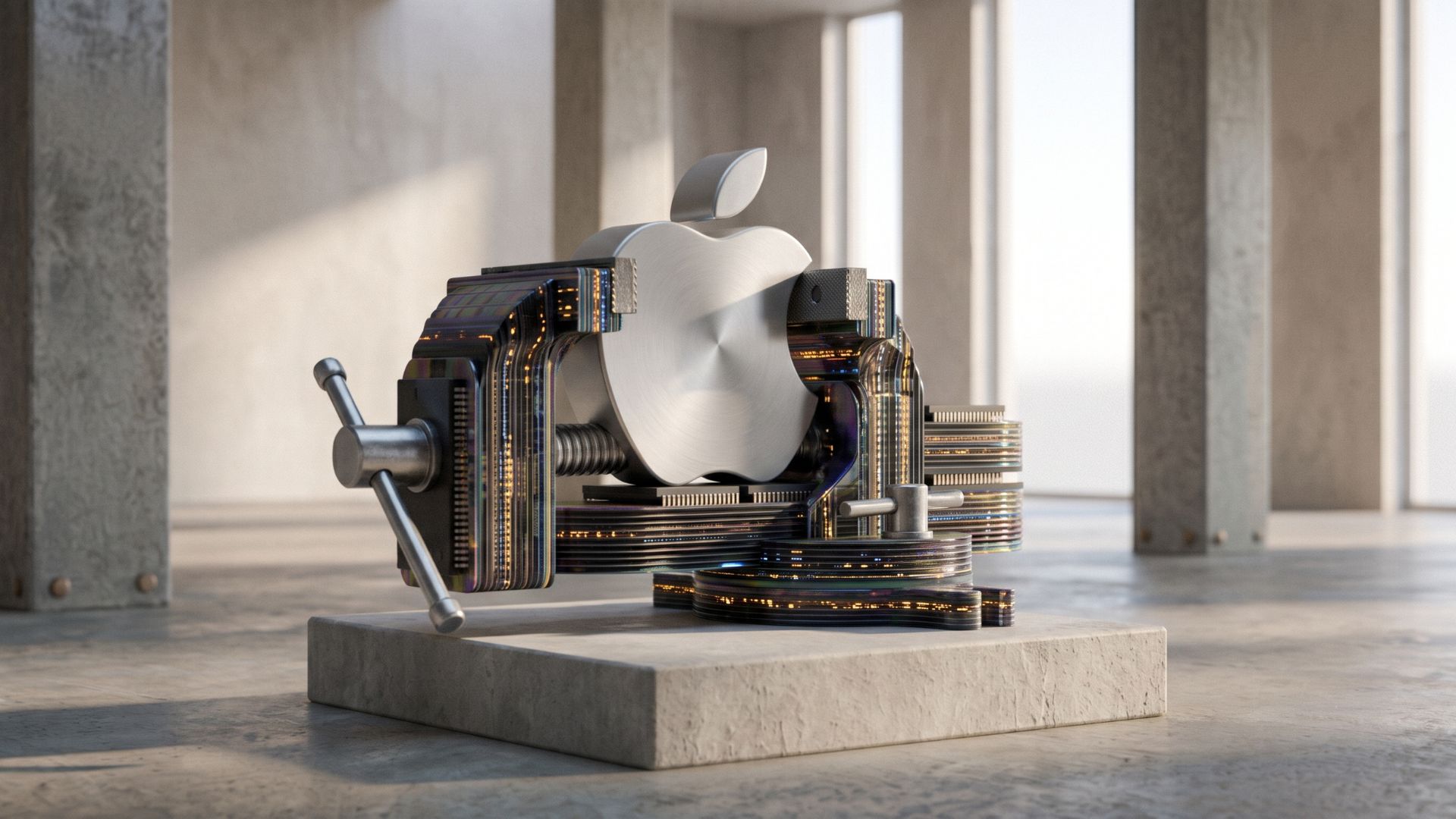
Apple has cut daily AI tool budgets for engineers and other staff as token costs mount, joining Microsoft, Tesla and Uber in capping developer AI spending.
Listen to this article
5 chapters

In this article
The Honeymoon Phase Gives Way to Token Discipline
Unrestricted corporate spending on AI has hit a hard ceiling inside Apple Park. After months of encouraging internal teams to explore third-party conversational and coding tools, Apple has introduced strict daily spending caps on employee token usage.
This reflects a broader shift across the technology sector. Where enterprise AI was once treated as an open-ended productivity tool, major tech companies are now looking closely at direct operating costs and the measurable return on daily token spending.
Slashing Daily Allowances Across Engineering
Internal daily spending limits for software engineers using commercial tools, including OpenAI’s ChatGPT, Anthropic’s Claude, and Google’s Gemini, have dropped from $300 to $200 per developer per day. Some engineering groups have been informed that daily allowances could soon drop further to $100.
Non-engineering staff face tighter limits. Most non-technical employees now operate under a $100 daily ceiling, with discussions underway to lower allowances to $25 per day for teams with lighter technical requirements. Anyone who needs higher limits must submit formal exemption requests to senior division leaders.
Token Costs and the Move Toward Local Workloads
The main reason behind the spending limits is the high ongoing cost of automated software work. Generating code, writing unit tests, and debugging scripts require massive volumes of input and output tokens. When thousands of engineers use these tools all day, the monthly bill quickly reaches the scale of a major cloud infrastructure deployment.
To curb costs, Apple managers are pointing developers toward smaller models and local hardware. By running open-source code assistants directly on Mac workstations with unified memory, engineers can handle everyday scripting locally without sending billable requests to third-party cloud servers.
Industry Pressures and the Decentralized Alternative
Apple is not alone in curbing artificial intelligence bills. Microsoft, Tesla, and Uber have all put similar caps on developer tools over the past year to stop ballooning software costs.
Company | Employee AI Spending Policy | Primary Use Case |
Apple | Capped at $100 to $200 per day (down from $300) | Software engineering, code testing, and debugging |
Tesla | Capped at $200 per week per employee | General operations and internal developer tooling |
Uber | Limited to $1,500 per month per developer tool | Dedicated coding and automation scripts |
Accenture | Capped at $29 per month for Claude usage | Enterprise consulting and administrative tasks |
For developers and the blockchain space, this corporate belt-tightening points to a clear market issue: centralized cloud computing remains an expensive bottleneck at enterprise scale. As tech firms push back against unpredictable cloud bills, interest is growing in decentralized physical infrastructure networks (DePIN). By pooling independent computing power through open networks, decentralized compute platforms offer a way to run code models and handle automated tasks without locked-in corporate pricing tiers.
The Morning Brief
Start every day knowing what matters in tech
Six stories chosen by our editors, in your inbox at 06:00 UTC. Free.
Instant notifications in this browser when big news breaks. No email needed, and you can turn them off any time.
See more Blockrora in Google
Make us a preferred source and our stories show up more often in Top Stories.

Editor and Writer at Blockrora. Backed by years in mainstream tech and health tech development, Lauren covers digital health, tech adoption, and the societal shifts shaping the web. Wellness advocate and coastal wanderer.
More from Lauren →