Google Challenges Nvidia With Two New AI Chips
Google added two custom AI processors, the TPU 8tx for confidential computing and the TPU 8i Max for memory-heavy prompts, aiming to reduce the industry's dependence on Nvidia.
Listen to this article
4 chapters
In this article
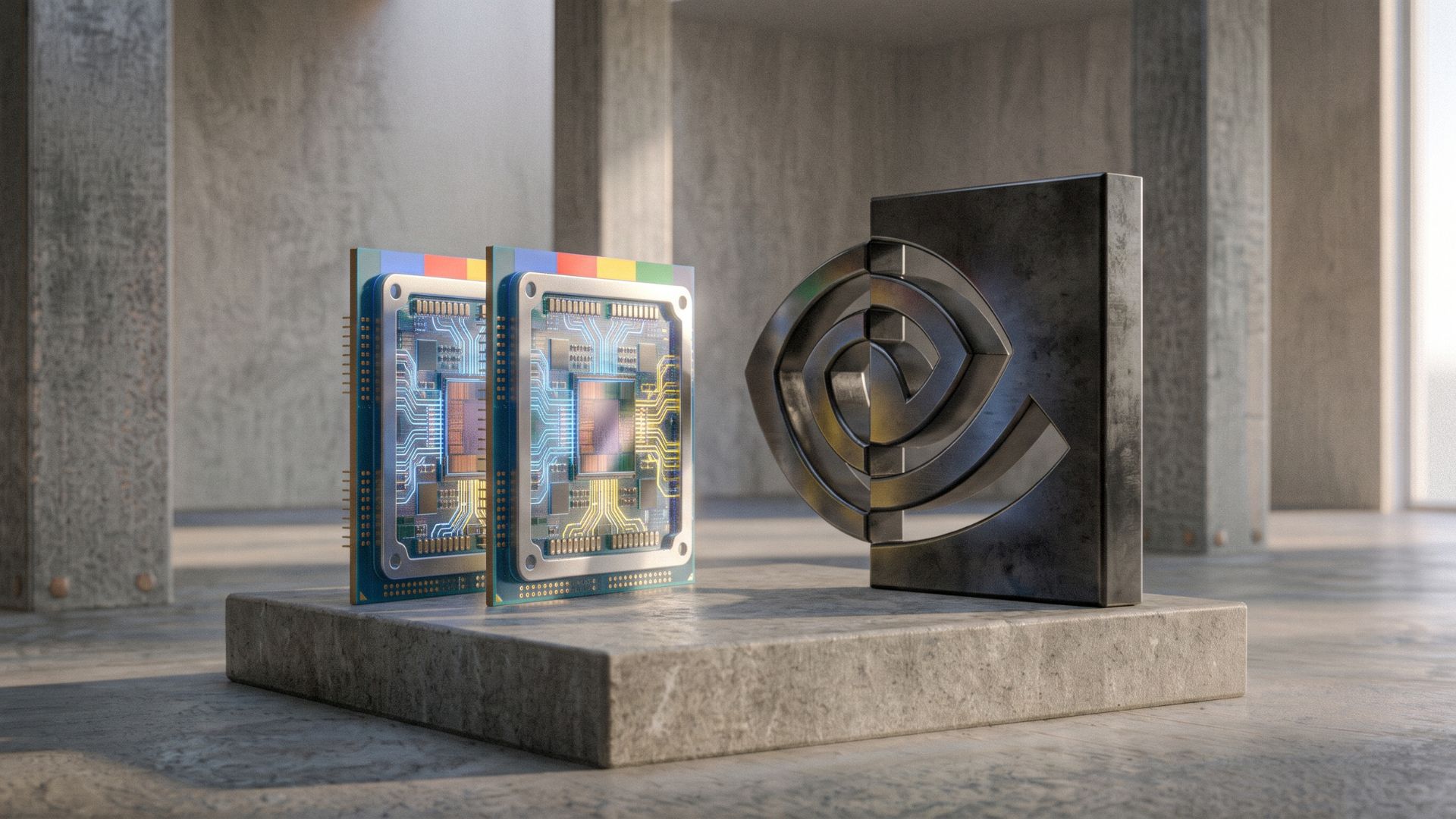
Building high-end artificial intelligence has almost always meant paying whatever Nvidia charges for its hardware. Google is working to break that dependency. The company just expanded its custom silicon family with two purpose-built processors: the TPU 8tx and the TPU 8i Max.
Rather than offering generic workhorse chips, Google is focusing on two specific pain points: handling strictly regulated private data and keeping up with massive, memory-heavy AI prompts.
Locking Down Data with the TPU 8tx
Banks, hospitals, and security-focused platforms often avoid public clouds because they cannot risk exposing sensitive customer data or proprietary code to shared hardware.
The TPU 8tx solves this through confidential computing. Paired with AMD EPYC processors, it uses hardware-level encryption to keep information scrambled even while it is actively being processed in memory. Because the data is never exposed in plaintext during computation, companies can run sensitive AI models without worrying about rogue access or memory leaks.
Cracking the Memory Bottleneck with the TPU 8i Max
Modern AI agents and reasoning tools often need to process hundreds of pages, dense codebases, or complex documents in a single prompt. Doing that quickly takes enormous memory bandwidth, which usually creates severe bottlenecks for standard chips.
Google tackled this with a clever hardware trick in the TPU 8i Max: it combined two chips onto a single module. This design doubles memory bandwidth and compute density without taking up extra space on the server rack. As a result, long-context models run noticeably faster without demanding more physical room in the data center.
Why Custom Chips Matter
Relying entirely on outside vendors leaves tech platforms exposed to price surges and supply shortages. By designing its own silicon, Google bypasses third-party markups, trims operational expenses by roughly 30%, and optimizes the hardware specifically for the software running on it.
Nvidia still dominates the AI hardware market, but Google’s custom strategy shows where the industry is heading. Winning today isn't just about packing raw, brute-force power into a server; it's about deploying chips built directly for the specific job at hand.
The Morning Brief
Start every day knowing what matters in tech
Six stories chosen by our editors, in your inbox at 06:00 UTC. Free.
Instant notifications in this browser when big news breaks. No email needed, and you can turn them off any time.
See more Blockrora in Google
Make us a preferred source and our stories show up more often in Top Stories.

Editor and Writer at Blockrora. Backed by years in mainstream tech and health tech development, Lauren covers digital health, tech adoption, and the societal shifts shaping the web. Wellness advocate and coastal wanderer.
More from Lauren →