Nvidia Board Weighs Ousting Jensen Huang After Second Affair
Nvidia's board is weighing whether to remove CEO Jensen Huang after a reported affair with a direct report, as a China espionage probe and a $600 billion stock slide deepen the crisis.
Listen to this article
4 chapters
In this article
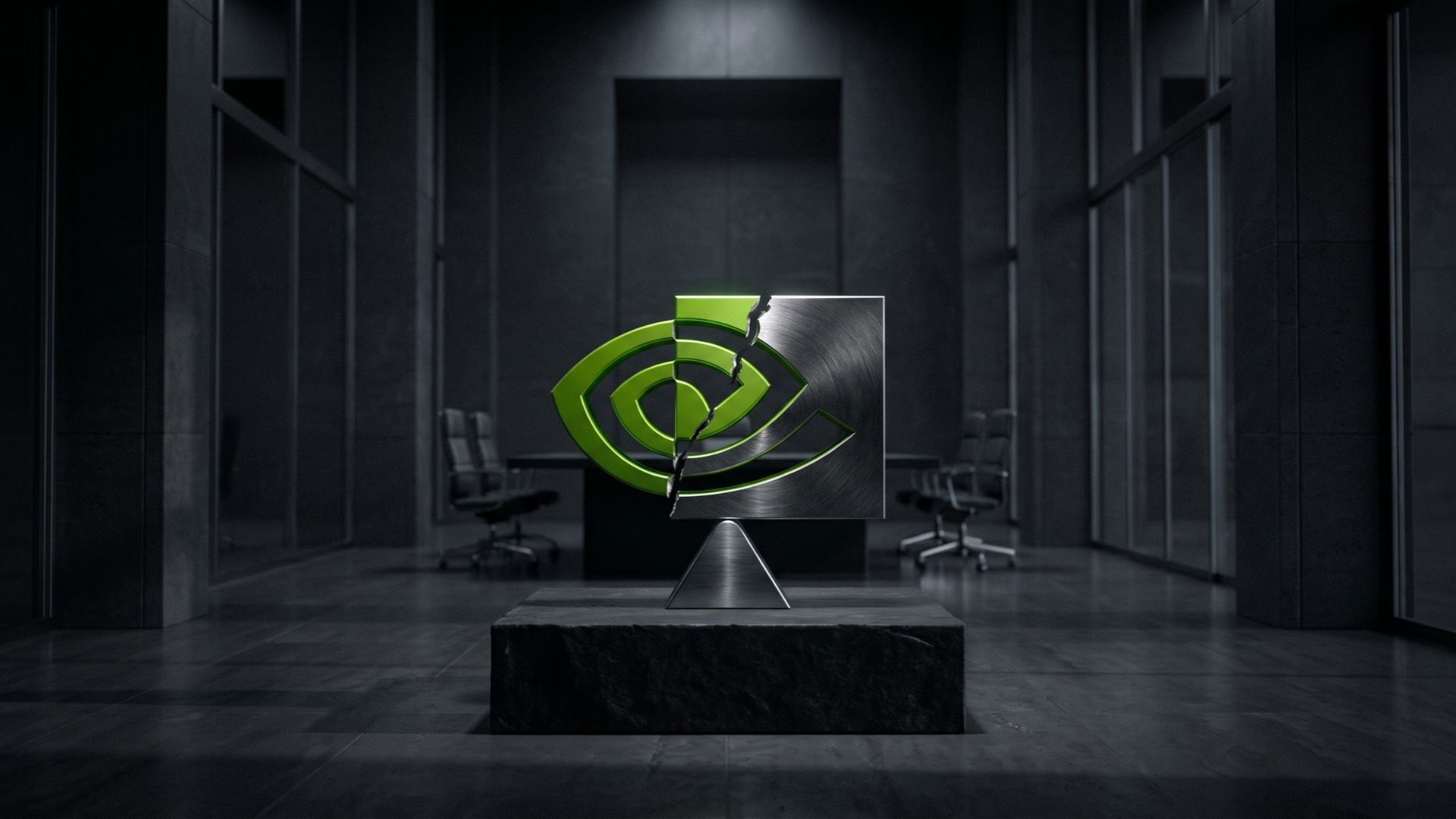
Nvidia faces its most severe leadership crisis in three decades as its board of directors meets to decide the future of co-founder and CEO Jensen Huang. The emergency discussions follow reports of a second extramarital affair involving the chief executive, compounding the fallout from an ongoing investigation into his relationship with an executive accused of Chinese espionage.
The crisis escalated sharply after the New York Times reported that Huang had an affair with Kimberly Powell, Nvidia’s vice president of healthcare. According to five company employees cited in the report, Powell, who is married and reports directly to Huang, was captured on video being affectionate with the CEO at a San Jose hotel during a conference earlier this year. Like most major corporations, Nvidia maintains policies discouraging romantic relationships between managers and their direct subordinates. When contacted by the New York Times regarding the allegations, Huang declined to answer and hung up.
From National Security Probe to Boardroom Revolt
The revelation of an internal workplace relationship comes just days after Huang publicly apologized to employees for being unfaithful to his wife. In a company-wide letter, he acknowledged the infidelity and linked it to national security concerns raised in recent press coverage, though he did not name the other party.
The initial scandal centered on Alice Huang, a businesswoman connected to Megaspeed International and Shanghai Century Litong, firms currently under scrutiny by U.S. and Singaporean authorities for allegedly smuggling banned Nvidia AI chips into China. U.S. intelligence officials previously circulated a secret memo warning that Alice Huang was an operative for China’s Ministry of State Security. President Donald Trump recently voiced support for Jensen Huang, stating the CEO told him he was unaware of any espionage ties, while Republican leaders from three House committees have threatened to subpoena Huang if he does not appear for a closed-door national security briefing.
Until the New York Times published its report on Powell, Nvidia’s board had publicly backed its founder. However, the combination of national security scrutiny and alleged violations of internal governance policies appears to have shifted sentiment inside the boardroom. Under Nvidia’s bylaws, the 10 independent directors hold the authority to remove Huang "with or without cause" by a majority vote.
Who Could Replace Jensen Huang?
Removing Huang would create an immediate leadership vacuum at the roughly $4 trillion chipmaker. Known for a hands-on management style with roughly 60 direct reports and no formal succession plan, Huang has been the single driving force behind Nvidia’s rise to the center of the global artificial intelligence boom.
If the board moves forward with an ouster, several internal and external candidates are emerging as potential replacements:
Colette Kress: Nvidia’s longtime chief financial officer is widely viewed by analysts as the most logical choice to step in as interim CEO to stabilize investor confidence, though observers question whether she would lead the company's long-term technical roadmap.
Ian Buck: As the Nvidia vice president who helped pioneer CUDA, the proprietary software platform that underpins Nvidia's dominance in AI computing, Buck represents an internal "builder" option, particularly if Huang is permitted to transition into a non-executive chairman role.
Andrew Bell: Nvidia’s senior vice president of hardware engineering has spent 25 years rising through the company’s technical ranks and offers deep product pedigree from within Huang's circle of direct reports.
Bret Taylor: Among external contenders, the former Salesforce co-CEO, current OpenAI board chair, and Sierra founder is seen as a seasoned Silicon Valley operator with strong relationships across Nvidia’s enterprise customer base.
Lip-Bu Tan and Eric Schmidt: Industry veterans like Intel CEO Lip-Bu Tan and former Google chief Eric Schmidt have also been floated by market watchers, though Schmidt’s own history of publicized extramarital relationships could make him a difficult sell for a board dealing with personal conduct fallout.
Market Fallout and Industry Implications
The prospect of Nvidia operating without its founder has already rattled global financial markets. Nvidia’s stock has shed roughly $600 billion in market value since the board first announced its internal investigation, with shares sliding further following reports that directors were preparing to remove him. Wall Street firms including Bernstein and Oppenheimer have downgraded the stock, while Citi lowered its price target, citing the uncertainty a leadership transition would create around product vision and customer relationships.
The ripple effects extend across the broader AI ecosystem. Shares of data center partners and suppliers such as CoreWeave, Micron, and SK Hynix dipped as investors weighed how a governance shakeup might slow Nvidia's aggressive financing of AI infrastructure projects. Conversely, rivals AMD and Broadcom saw their stock prices climb as traders bet that an extended boardroom distraction in Santa Clara could open the door for competitors to gain ground in the high-stakes AI chip market.
With Nvidia scheduled to report its quarterly earnings on November 17, the board faces mounting pressure to resolve the leadership question before executives face Wall Street analysts.
Topics
The Morning Brief
Start every day knowing what matters in tech
Six stories chosen by our editors, in your inbox at 06:00 UTC. Free.
Instant notifications in this browser when big news breaks. No email needed, and you can turn them off any time.
See more Blockrora in Google
Make us a preferred source and our stories show up more often in Top Stories.

Editor and Writer at Blockrora. Backed by years in mainstream tech and health tech development, Lauren covers digital health, tech adoption, and the societal shifts shaping the web. Wellness advocate and coastal wanderer.
More from Lauren →