U.K. Forced to Reveal Secret Apple Backdoor Order
Britain's Investigatory Powers Tribunal forced the Home Office to confirm it ordered Apple to build an iCloud encryption backdoor, a first that sets up a 2027 trial.
Listen to this article
4 chapters
In this article
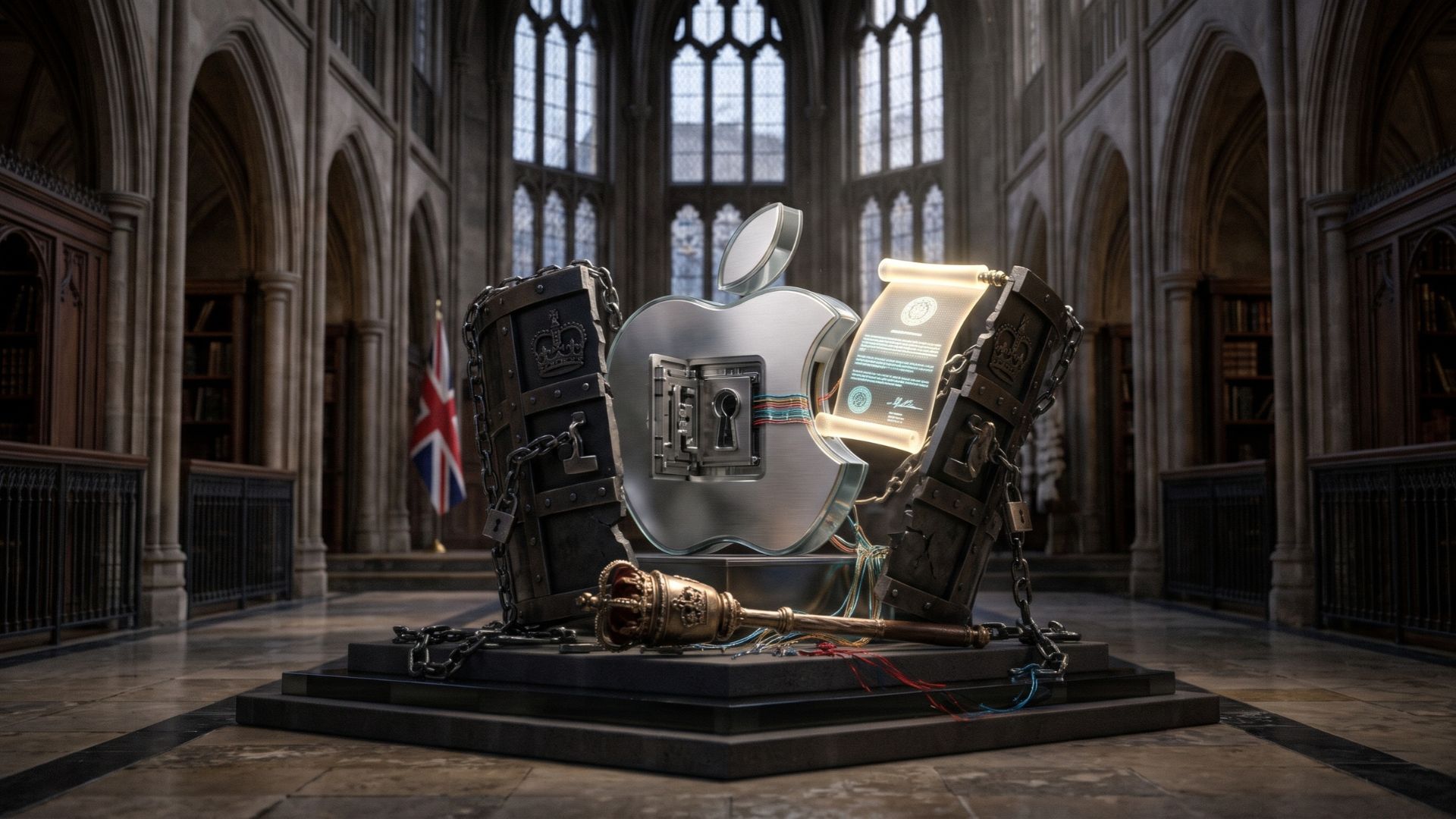
A landmark ruling from Britain's Investigatory Powers Tribunal has stripped away the secrecy surrounding a controversial surveillance directive, forcing the U.K. government to officially acknowledge that it ordered Apple to create a backdoor into encrypted customer data.
The judicial rebuke targets the U.K. Home Office, which had invoked national security to enforce a strict "neither confirm nor deny" stance regarding its demands on the Cupertino tech giant. Under the Investigatory Powers Act, British authorities have the power to issue a "technical capabilities notice", a sweeping legal instrument that compels technology companies to build mechanisms allowing intelligence agencies to bypass encryption, while gagging the companies from ever admitting the order exists.
Following a determined legal challenge spearheaded by human rights advocacy group Liberty alongside Privacy International, three judges dismantled the government's secrecy argument. The tribunal noted that the directive was already widely known due to prior media leaks and official briefings, concluding that formally confirming the notice would not damage national security. This marks the first known instance in British legal history where the government has been compelled to publicly admit to issuing a secret technical surveillance order.
How Apple Pushed Back
The standoff dates back to early 2025, when the Home Office quietly demanded blanket access to encrypted iCloud data belonging to Apple users worldwide. Building a master key for British authorities would have compromised the cryptographic integrity of Apple's ecosystem, sparking sharp pushback from U.S. lawmakers and White House officials who warned that American privacy was being placed directly in the crosshairs of foreign surveillance.
Rather than compromise its architecture or violate its long-standing pledge to never build a backdoor, Apple took the unprecedented step of pulling its optional Advanced Data Protection (ADP) feature from the U.K. market. ADP provides end-to-end encryption for sensitive iCloud backups, photos, and notes, ensuring only the user, never Apple, holds the decryption keys. While core communications like iMessage and FaceTime remained end-to-end encrypted, new British users were effectively locked out of top-tier cloud security. The Home Office later narrowed its demand to British nationals, a revised order that Apple swiftly challenged in court.
Why Cryptographic Integrity Matters Beyond Big Tech
The clash between Whitehall and Silicon Valley strikes at the heart of modern digital sovereignty, a principle that underpins both consumer privacy and decentralized technologies. Cryptographic security relies on mathematical certainty: an encryption protocol cannot be selectively weakened for "good guys" without simultaneously exposing every user, enterprise, and network to malicious actors and state-sponsored hackers.
For advocates of privacy-first infrastructure and blockchain ecosystems, the U.K. tribunal's ruling serves as a vital check against unchecked executive overreach. Secret mandates that force centralized gatekeepers to undermine their own security models highlight the systemic risks of relying on closed, corporate-controlled cloud storage when governments can quietly demand the keys behind closed doors.
The Road to 2027
While lifting the gag order allows Apple to finally speak openly about the existence of the notice, the broader legal war is far from over. The tribunal's decision confirms only that the order was issued; the exact technical demands remain classified, and Advanced Data Protection remains unavailable to U.K. customers for the time being.
Both sides are now preparing for a substantive trial expected in the first half of 2027. In those upcoming proceedings, judges will decide how much of the order's actual text can be declassified and, more critically, whether the U.K. government has the legal authority to force technology companies to dismantle end-to-end encryption altogether.
The Morning Brief
Start every day knowing what matters in tech
Six stories chosen by our editors, in your inbox at 06:00 UTC. Free.
Instant notifications in this browser when big news breaks. No email needed, and you can turn them off any time.
See more Blockrora in Google
Make us a preferred source and our stories show up more often in Top Stories.

Editor and Writer at Blockrora. Backed by years in mainstream tech and health tech development, Lauren covers digital health, tech adoption, and the societal shifts shaping the web. Wellness advocate and coastal wanderer.
More from Lauren →