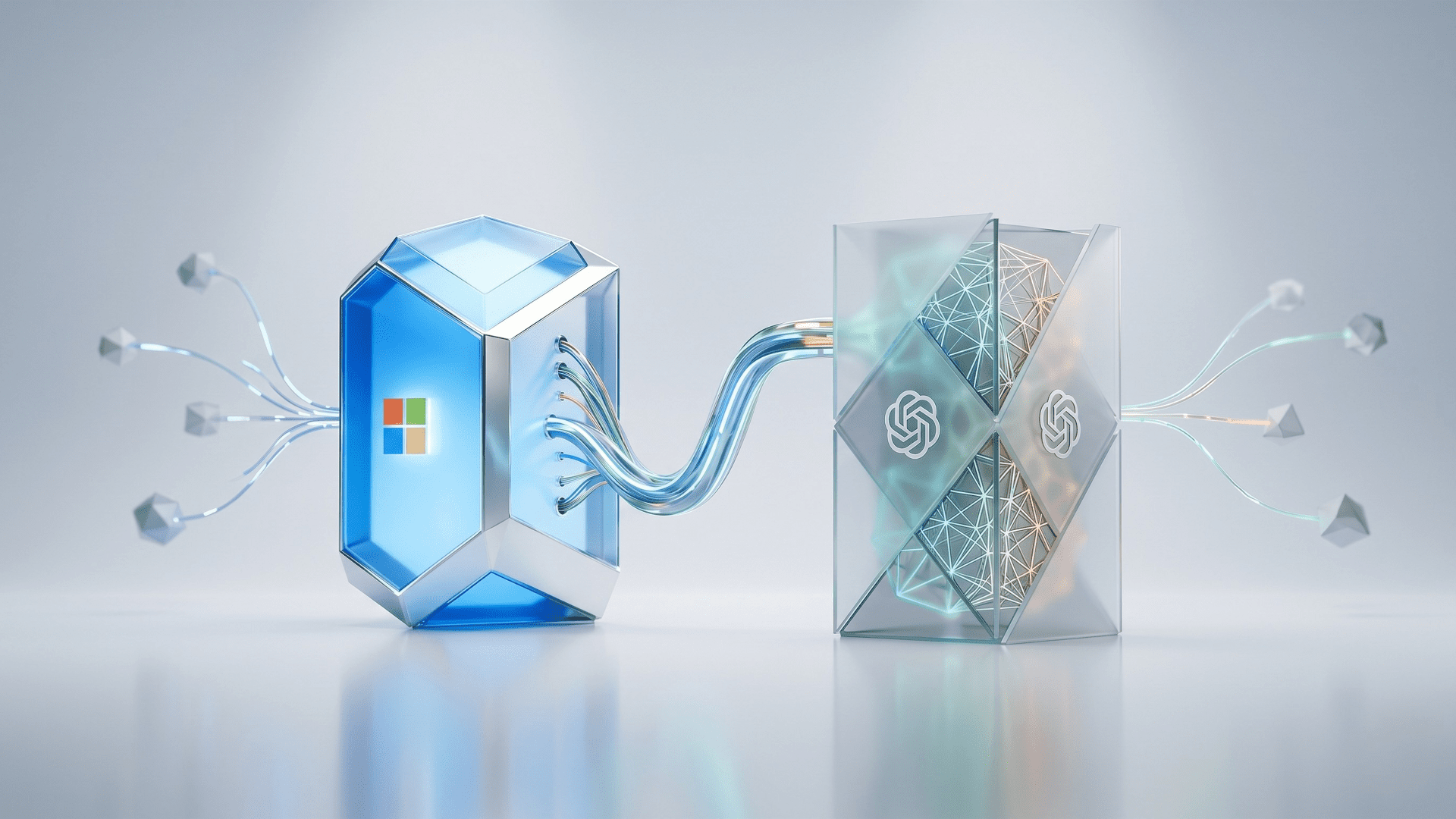
In the high-stakes world of Silicon Valley, some partnerships are so deep they feel like a marriage. For years, the alliance between Microsoft and OpenAI was the ultimate “power couple” of the AI era. Microsoft provided the massive compute power (and billions of dollars), while OpenAI provided the revolutionary brains behind ChatGPT.
But on April 27, 2026, the two companies officially “rewrote their marriage contract.” Moving away from a strict, exclusive alliance, they have transitioned into what industry insiders are calling a strategic “open relationship.”
For Blockrora readers, this isn’t just corporate housekeeping; it represents a seismic shift in how AI power is distributed globally.
The Breakdown: What Just Changed?
The amended agreement signals the end of the “exclusivity era.” Here are the three pillars of the new deal:
- Goodbye, Exclusivity: Microsoft’s License to OpenAI’s Technology Is No Longer Exclusive. OpenAI is now free to bring its cutting-edge models to other cloud giants like Amazon (AWS) and Google Cloud.
- The “AGI Clause” is Dead: Previously, a mysterious clause stated that if OpenAI ever achieved Artificial General Intelligence (AGI), Microsoft’s rights to the tech would vanish. That “doomsday” trigger has been scrapped. In its place is a clean, predictable commercial agreement that extends through 2032.
- Financial Independence: The revenue-sharing model has been simplified. Microsoft will stop paying OpenAI a cut of its resold Azure AI services, and OpenAI’s payments back to Microsoft are now capped and tied to dates rather than technical milestones.
Why the “Uncoupling” Is Happening Now
Why would Microsoft, the company that rode OpenAI’s coattails to become the most valuable firm in the world, agree to let its rivals have a piece of the pie?
1. Regulatory Heat Antitrust regulators in the US and EU have been breathing down the necks of “Big Tech.” By loosening the ties, Microsoft reduces the risk of being labeled a monopoly. It shifts the perception from a “merger-in-all-but-name” to a standard commercial partnership.
2. The Compute Crunch Training the next generation of models requires more “juice” than any single company can provide. By opening the door to AWS and Google, OpenAI gains access to a more diverse array of hardware and global data centers, ensuring they aren’t bottlenecked by Azure’s capacity.
3. Microsoft’s Plan B Microsoft hasn’t been sitting idle. Over the past year, they have aggressively built their own internal AI team (led by former DeepMind co-founder Mustafa Suleyman) and developed “MAI-1,” their own homegrown frontier model. They are no longer 100% dependent on OpenAI for their survival.
The Blockrora Angle: A Step Toward Decentralization?
For the tech and blockchain community, this news is a win for decentralization.
For the last three years, the most powerful AI in the world was effectively behind a single “walled garden.” If you wanted the best GPT models, you had to use Microsoft Azure. This created a single point of failure and a massive concentration of power.
By moving to a multi-cloud world:
- Developers Win: You can now deploy OpenAI models on the cloud infrastructure that best fits your project’s latency, cost, and security needs.
- Competition Spikes: Amazon and Google are no longer just “the other guys.” They are now direct distributors of the world’s most famous AI, which will likely lead to a price war on API tokens.
- Infrastructure Diversity: As blockchain-based decentralized compute networks (like DePIN) continue to grow, a more “open” OpenAI could eventually see its models running on more diverse, distributed frameworks.
Looking Ahead: The 2032 Horizon
While the exclusivity is gone, the partnership is far from over. Microsoft remains OpenAI’s “primary” partner and holds a massive equity stake in the company.
However, the “Open Relationship” era marks a maturing of the AI industry. We are moving away from hype-driven exclusive deals and toward a future where AI is treated like a utility, available everywhere, to everyone, across every cloud.
The walls are coming down, and for the tech ecosystem at large, that is a very good thing.